Introduction
One of the most common questions patients ask after being diagnosed with fatty liver is:
“Can fatty liver be reversed completely?”
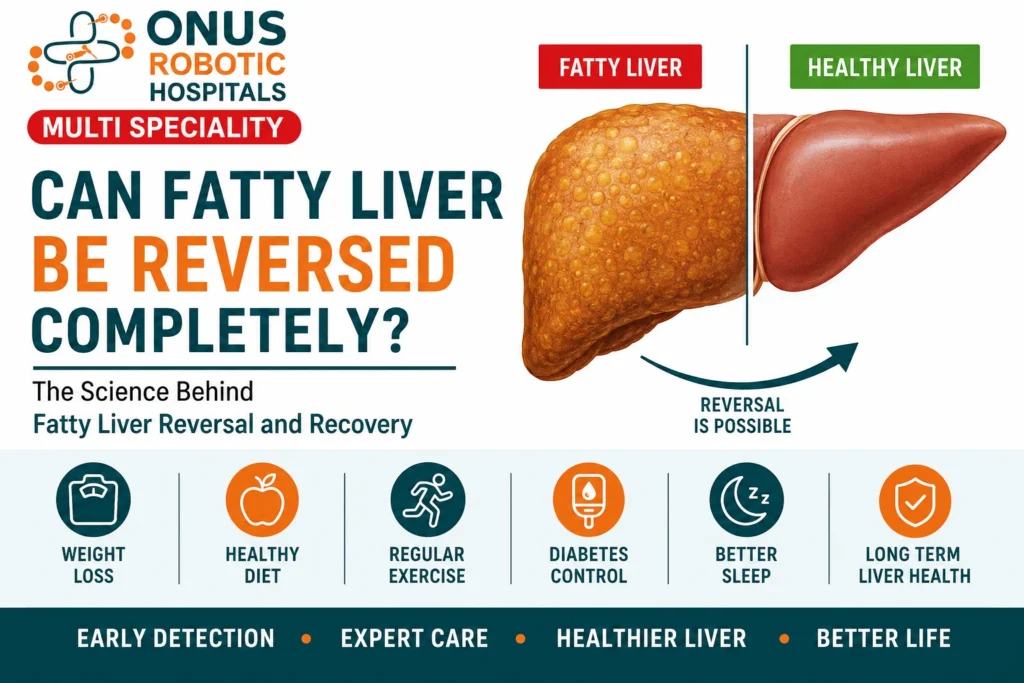
The answer is encouraging. In many cases, especially when detected early, fatty liver can be significantly improved and often completely reversed through appropriate treatment and lifestyle modifications. The liver is one of the few organs in the human body with a remarkable ability to heal and regenerate when the underlying cause of damage is removed.
Today, Non-Alcoholic Fatty Liver Disease (NAFLD) has become one of the fastest-growing liver disorders worldwide due to increasing rates of obesity, diabetes, insulin resistance, and sedentary lifestyles.
Understanding how fatty liver develops and what steps are required to reverse it can help patients protect themselves from long-term complications such as liver fibrosis, cirrhosis, and liver cancer.
What Is Fatty Liver Disease?
Fatty liver disease occurs when excessive fat accumulates inside liver cells. Normally, the liver contains a small amount of fat, but when fat accumulation exceeds healthy levels, it is known as hepatic steatosis or fatty liver disease.
The most common form is:
Non-Alcoholic Fatty Liver Disease (NAFLD)
NAFLD is strongly associated with:
- Obesity
- Type 2 Diabetes
- Prediabetes
- Insulin Resistance
- High Triglycerides
- Metabolic Syndrome
- Sedentary Lifestyle
Many individuals discover they have fatty liver during a routine ultrasound examination, even though they may not have any symptoms.
Why Is Fatty Liver Increasing So Rapidly?
Modern lifestyle habits have significantly contributed to the rise of fatty liver disease.
Common contributing factors include:
- Excess sugar consumption
- Processed foods
- Lack of exercise
- Obesity
- Sleep deprivation
- Chronic stress
- Insulin resistance
As metabolic disorders become more common, NAFLD is increasingly being recognized as a major public health concern.
Can Fatty Liver Really Be Reversed?
The Good News: Yes, It Often Can
Unlike advanced cirrhosis, early-stage fatty liver is highly reversible. The liver can recover when fat accumulation is reduced and metabolic health improves.
However, the chances of reversal depend on the stage of disease.
Stages of Fatty Liver and Their Reversal Potential
Grade 1 Fatty Liver
Characteristics
- Mild fat accumulation
- Minimal liver damage
- Usually no symptoms
Reversal Potential
✅ Excellent
Most patients can completely reverse Grade 1 fatty liver through:
- Weight loss
- Dietary changes
- Regular exercise
- Better blood sugar control
Grade 2 Fatty Liver
Characteristics
- Moderate fat accumulation
- Increased metabolic dysfunction
Reversal Potential
✅ Very Good
Grade 2 fatty liver often improves significantly with a structured treatment plan and consistent lifestyle modification.
NASH (Non-Alcoholic Steatohepatitis)
NASH represents a more advanced stage where:
- Fat accumulates
- Inflammation develops
- Liver cells become injured
Reversal Potential
⚠ Possible
Early NASH can improve with aggressive intervention and close medical supervision.
Liver Fibrosis
Fibrosis occurs when scar tissue begins replacing healthy liver tissue.
Reversal Potential
⚠ Partial reversal may occur
Recent studies suggest that early fibrosis can improve when the underlying metabolic abnormalities are corrected.
Liver Cirrhosis
Characteristics
- Extensive scarring
- Permanent structural damage
Reversal Potential
❌ Limited
At this stage, treatment focuses on slowing progression and preventing complications.
Why Does Fatty Liver Develop?
The main driver of fatty liver disease is:
Insulin Resistance
When the body’s cells become resistant to insulin:
- Blood sugar levels rise
- Fat production increases
- Triglycerides accumulate
- Excess fat is stored in the liver
This explains why fatty liver commonly occurs alongside:
- Diabetes
- Obesity
- PCOS
- Metabolic Syndrome
- High Cholesterol
The Science Behind Fatty Liver Reversal
Fatty liver develops when:
Fat Entering the Liver > Fat Leaving the Liver
Fatty liver reversal occurs when:
Fat Leaving the Liver > Fat Entering the Liver
The primary goal of treatment is to reduce liver fat accumulation while improving fat metabolism.
Best Strategies for Fatty Liver Reversal
1. Weight Loss
Weight loss remains the most effective treatment.
Research Shows:
5% Weight Loss
- Significant reduction in liver fat
7–10% Weight Loss
- Reduced inflammation
- Better insulin sensitivity
- Improved liver enzymes
More Than 10% Weight Loss
- May improve fibrosis in selected patients
2. Follow a Fatty Liver Diet
Foods to Include
Protein Sources
- Eggs
- Fish
- Chicken
- Paneer
- Lentils
- Greek Yogurt
Healthy Fats
- Nuts
- Seeds
- Olive Oil
Vegetables
- Spinach
- Broccoli
- Cucumber
- Bottle Gourd
- Ridge Gourd
Foods to Avoid
Sugary Foods
- Soft drinks
- Sweets
- Packaged juices
Refined Carbohydrates
- White bread
- Bakery products
- Excess white rice
Processed Foods
- Chips
- Fast food
- Packaged snacks
Reducing sugar intake is one of the fastest ways to improve liver health.
3. Exercise Regularly
Exercise directly reduces liver fat and improves insulin sensitivity.
Recommended Activities
- Brisk Walking
- Jogging
- Cycling
- Swimming
- Strength Training
Aim for:
150–300 minutes of exercise per week.
4. Control Diabetes
Proper diabetes management improves:
- Insulin sensitivity
- Liver fat content
- Metabolic health
Maintaining a healthy HbA1c is critical for successful fatty liver reversal.
5. Improve Sleep
Poor sleep contributes to:
- Weight gain
- Increased cortisol
- Insulin resistance
- Fatty liver progression
Aim for:
- 7–8 hours of quality sleep
- Consistent sleep schedule
6. Manage Stress
Chronic stress negatively impacts metabolic health.
Helpful strategies include:
- Yoga
- Meditation
- Breathing exercises
- Mindfulness practices
Can Medicines Reverse Fatty Liver?
Currently, there is no single medication that completely cures fatty liver disease.
However, doctors may prescribe treatments aimed at:
- Weight loss
- Diabetes control
- Cholesterol reduction
- Metabolic optimization
Medication works best when combined with diet and exercise.
How Long Does Fatty Liver Reversal Take?
Improvement depends on:
- Disease severity
- Weight loss achieved
- Exercise consistency
- Diet adherence
Typical Timeline
4–8 Weeks
- Improved metabolic markers
3–6 Months
- Reduced liver fat
6–12 Months
- Significant improvement in liver health
How Is Improvement Monitored?
Your doctor may recommend:
FibroScan
Measures:
- Liver fat
- Liver stiffness
- Fibrosis
Ultrasound
Tracks changes in fatty infiltration.
Blood Tests
- ALT
- AST
- HbA1c
- Lipid Profile
These tests help monitor treatment progress objectively.
Common Mistakes That Prevent Fatty Liver Reversal
❌ Waiting for symptoms
❌ Depending only on medicines
❌ Ignoring belly fat
❌ Drinking sugary beverages
❌ Inconsistent exercise
❌ Frequent cheat meals
Because fatty liver is often silent, many patients delay treatment until significant damage has already occurred.
Frequently Asked Questions
Can Grade 1 Fatty Liver Be Reversed Completely?
Yes. Grade 1 fatty liver has an excellent prognosis when treated early.
Can Grade 2 Fatty Liver Be Reversed?
Yes. Most patients experience significant improvement with structured treatment.
Is Fatty Liver Permanent?
No. Early-stage fatty liver is usually reversible.
Can Exercise Alone Reverse Fatty Liver?
Exercise helps greatly, but combining exercise with dietary changes produces the best results.
Conclusion
The answer to “Can fatty liver be reversed completely?” is often yes, particularly when the condition is identified in its early stages and managed properly. Fatty liver is not a life sentence—it is a warning sign that your metabolic health needs attention.
With:
- Weight loss
- Healthy nutrition
- Regular exercise
- Better sleep
- Diabetes control
- Professional medical guidance
many patients can successfully reverse fatty liver and protect themselves from future complications. The earlier treatment begins, the better the outcome.
Consultation
📍 Dr. Ravi Kiran
Diabetologist & Preventive Medicine Specialist
Onus Robotic Hospital, Hyderabad