Introduction
Losing weight is one of the most common health goals worldwide. Every year, millions of people begin a new diet with hopes of achieving lasting results. From low-carb diets and intermittent fasting to detox programs and meal replacements, the options seem endless.
Yet despite initial success, many individuals find themselves regaining the weight they worked so hard to lose. This cycle of losing and regaining weight—often called yo-yo dieting—can be physically exhausting and emotionally frustrating.
The reality is that obesity is far more complex than simply eating too much or exercising too little. Body weight is influenced by hormones, metabolism, genetics, sleep quality, stress levels, medications, and underlying medical conditions.
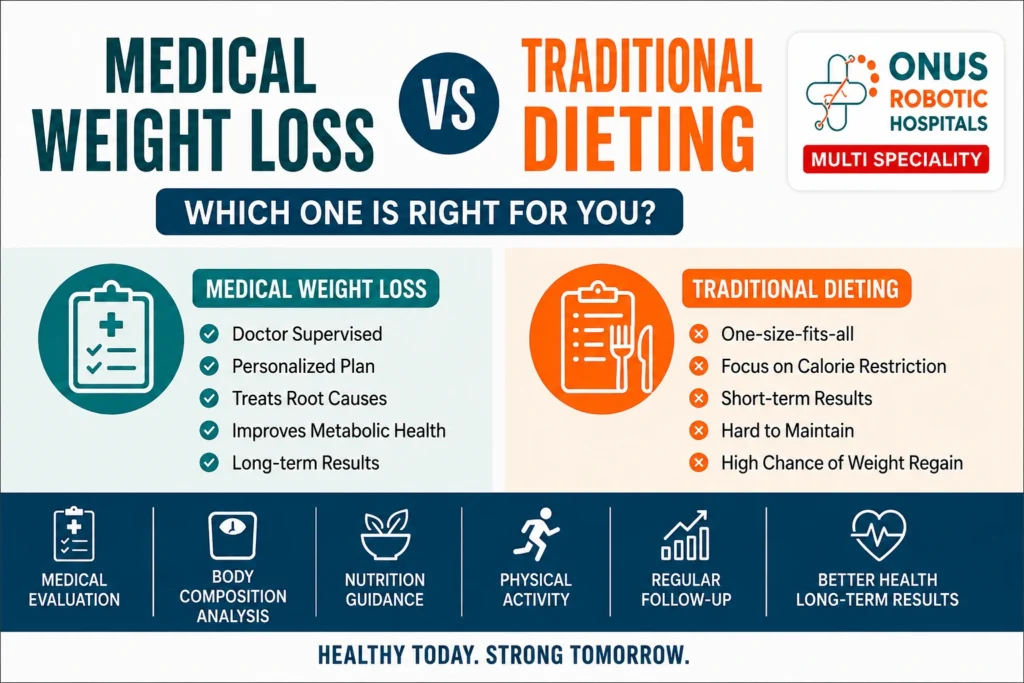
This is where medical weight loss differs significantly from traditional dieting. Rather than focusing solely on calorie restriction, medical weight loss aims to identify and address the root causes of weight gain while creating a sustainable path to long-term health.
At Health Vision General & Sugar Clinic, Dr. P. Ravi Kiran provides personalized, evidence-based weight management programs designed to improve metabolic health and help patients achieve lasting results.
Understanding the Obesity Epidemic
Obesity has become one of the leading health challenges worldwide.
Excess body weight increases the risk of:
- Type 2 Diabetes
- Heart Disease
- High Blood Pressure
- Fatty Liver Disease
- Sleep Apnea
- Stroke
- Joint Problems
- Certain Cancers
- Infertility
- Metabolic Syndrome
Despite growing awareness, many people continue to rely on short-term diet solutions that fail to address the underlying causes of obesity.
What Is Traditional Dieting?
Traditional dieting typically focuses on reducing calorie intake or following a specific eating pattern to lose weight.
Popular examples include:
- Low-Carbohydrate Diets
- Low-Fat Diets
- Keto Diets
- Detox Programs
- Juice Cleanses
- Meal Replacement Plans
- Fad Diets
- Internet Diet Charts
- Very Low-Calorie Diets
While some of these methods may produce temporary weight loss, they often fail to create sustainable behavioral and metabolic changes.
Why Traditional Diets Often Fail
Most traditional diets are built around restriction.
While reducing calories can initially result in weight loss, long-term success becomes difficult when the approach is too rigid or unrealistic.
Common Challenges Include:
Constant Hunger
Restrictive diets often increase feelings of deprivation and cravings.
Loss of Muscle Mass
Rapid weight loss frequently includes muscle loss, which can slow metabolism.
Metabolic Adaptation
The body responds to calorie restriction by becoming more energy-efficient, making further weight loss harder.
Nutritional Deficiencies
Eliminating entire food groups can lead to deficiencies in essential nutrients.
Poor Sustainability
Many people cannot maintain restrictive eating patterns long term.
Weight Regain
When normal eating habits resume, weight often returns quickly.
This is one reason why many individuals experience repeated cycles of dieting and weight gain.
What Is Medical Weight Loss?
Medical weight loss is a physician-supervised, evidence-based approach to weight management.
Rather than focusing only on calories, it evaluates the patient’s overall health, metabolic status, and lifestyle factors.
The primary goal is not simply to reduce body weight but to improve overall health and reduce disease risk.
Key Components of a Medical Weight Loss Program
A comprehensive medical weight loss program may include:
Detailed Medical Evaluation
Understanding a patient’s health history is essential.
This may involve reviewing:
- Previous weight-loss attempts
- Existing medical conditions
- Family history
- Current medications
- Lifestyle habits
Physical Examination
A physician evaluates factors that may influence metabolism and weight regulation.
Laboratory Testing
Blood tests help identify hidden metabolic issues such as:
- Prediabetes
- Diabetes
- Insulin Resistance
- Thyroid Disorders
- Cholesterol Abnormalities
- Fatty Liver Disease
Body Composition Analysis
Unlike a standard weighing scale, body composition testing measures:
- Body Fat Percentage
- Muscle Mass
- Visceral Fat
- Hydration Status
These measurements provide a clearer picture of metabolic health.
Why Medical Evaluation Matters
Not everyone gains weight for the same reasons.
Some patients struggle because of underlying conditions such as:
Insulin Resistance
One of the most common barriers to weight loss.
High insulin levels encourage fat storage and make fat burning more difficult.
Prediabetes and Type 2 Diabetes
Poor blood sugar regulation can significantly affect metabolism.
Fatty Liver Disease
Often linked to obesity and insulin resistance.
Thyroid Disorders
An underactive thyroid can contribute to weight gain and fatigue.
Polycystic Ovary Syndrome (PCOS)
Hormonal imbalances and insulin resistance can make weight loss challenging.
Sleep Apnea
Poor sleep quality affects hunger hormones and metabolism.
Without addressing these conditions, weight-loss efforts may be less effective.
Personalized Treatment vs Generic Diet Plans
One of the biggest advantages of medical weight loss is personalization.
Every patient has unique:
- Health conditions
- Lifestyle demands
- Food preferences
- Activity levels
- Metabolic profiles
- Weight-loss goals
A personalized plan is far more likely to succeed than a generic diet downloaded from the internet.
Looking Beyond the Scale
Many people judge success solely by the number on the weighing scale.
However, medical weight loss focuses on improving overall health markers.
Meaningful Improvements Include:
- Reduced waist circumference
- Lower body fat percentage
- Reduced visceral fat
- Improved blood sugar levels
- Better cholesterol levels
- Lower blood pressure
- Improved sleep quality
- Increased energy
- Better physical fitness
These improvements often occur before dramatic weight changes are visible.t management.
Nutrition in Medical Weight Loss
Medical weight loss does not promote starvation or extreme restriction.
Instead, patients learn sustainable eating habits.
Core Principles Include:
Increasing Protein Intake
Protein helps:
- Preserve muscle mass
- Improve satiety
- Support metabolism
Eating More Vegetables
Vegetables provide:
- Fiber
- Vitamins
- Minerals
- Low-calorie volume
Choosing High-Fiber Foods
Fiber supports:
- Blood sugar control
- Digestive health
- Appetite regulation
Reducing Ultra-Processed Foods
Minimizing highly processed foods improves metabolic health and calorie control.
The Role of Exercise
Exercise remains an important component of successful weight management.
Benefits Include:
- Improved insulin sensitivity
- Better cardiovascular health
- Increased muscle mass
- Enhanced metabolism
- Reduced stress
- Improved mental well-being
A balanced program often includes:
Aerobic Exercise
Examples:
- Walking
- Cycling
- Swimming
Resistance Training
Strength training helps:
- Build muscle
- Increase metabolic rate
- Improve long-term weight maintenance
Daily Movement
Simple lifestyle activities can contribute significantly to energy expenditure.
Can Weight Loss Medications Help?
For selected patients, medications may be considered as part of a comprehensive treatment plan.
These medications may help:
- Reduce appetite
- Improve satiety
- Enhance metabolic control
However, medication is never a substitute for healthy habits.
It works best when combined with:
- Nutrition planning
- Physical activity
- Lifestyle modification
- Ongoing medical supervision
Why Follow-Up Is Essential
One of the biggest reasons traditional diets fail is the lack of ongoing support.
Medical weight loss programs provide regular follow-up visits that allow healthcare providers to:
- Monitor progress
- Review body composition
- Evaluate laboratory results
- Adjust nutrition strategies
- Address barriers
- Reinforce healthy habits
Long-term accountability significantly improves success rates.
Who Should Consider Medical Weight Loss?
Medical weight loss may be particularly beneficial for individuals who:
- Have obesity
- Are overweight with health complications
- Have Type 2 Diabetes
- Have Prediabetes
- Have Fatty Liver Disease
- Have High Blood Pressure
- Have High Cholesterol
- Have PCOS
- Experience repeated weight regain
- Struggle despite diet and exercise efforts
Early intervention often prevents future complications.
The Health Vision 100-Day Metabolic Transformation Program
At Health Vision General & Sugar Clinic, Dr. P. Ravi Kiran has developed a structured 100-Day Metabolic Transformation Program focused on sustainable lifestyle change and metabolic improvement.
Program Highlights
✅ Comprehensive Medical Assessment
✅ Body Composition Analysis
✅ Personalized Nutrition Planning
✅ Exercise Prescription
✅ Lifestyle Coaching
✅ Diabetes Prevention & Management
✅ Fatty Liver Management
✅ Regular Follow-Up Consultations
✅ Progress Monitoring
✅ Long-Term Maintenance Planning
The emphasis is on creating lasting habits rather than temporary weight loss.
Frequently Asked Questions
Is medical weight loss only for people with severe obesity?
No. It can benefit anyone who is overweight or struggling with obesity-related conditions such as diabetes, fatty liver disease, PCOS, or hypertension.
Will I need to follow a strict diet forever?
No. Medical weight loss focuses on building sustainable eating habits rather than lifelong restriction.
Can I lose weight without exercising?
Nutrition plays a major role in weight loss, but exercise improves metabolic health, preserves muscle mass, and supports long-term maintenance.
How quickly will I see results?
Results vary from person to person. The focus should be on steady, sustainable progress rather than rapid weight loss.
Conclusion
Traditional dieting often focuses only on food restriction, while medical weight loss addresses the complete picture—your metabolism, hormones, lifestyle, body composition, and overall health.
Sustainable weight management is not about finding the latest diet trend. It is about understanding the underlying factors contributing to weight gain and creating a personalized, medically guided strategy that works for your body.
If you have struggled with repeated dieting, weight regain, diabetes, fatty liver disease, PCOS, or obesity-related health concerns, a physician-supervised weight management program may provide the long-term solution you have been looking for.
About Dr. P. Ravi Kiran
Dr. P. Ravi Kiran is a General Physician, Diabetologist, and Preventive Medicine Specialist with expertise in obesity management, diabetes care, fatty liver disease, hypertension, and metabolic health. Through Health Vision General & Sugar Clinic, he provides evidence-based, personalized treatment plans focused on sustainable weight loss, improved metabolic health, and long-term wellness.
Consultation
📍 Dr. Ravi Kiran
Diabetologist & Preventive Medicine Specialist
Onus Robotic Hospital, Hyderabad