By Dr. P. Ravi Kiran | General Physician, Diabetologist & Preventive Medicine Specialist | ONUS Robotic Hospital, Hyderabad
Introduction
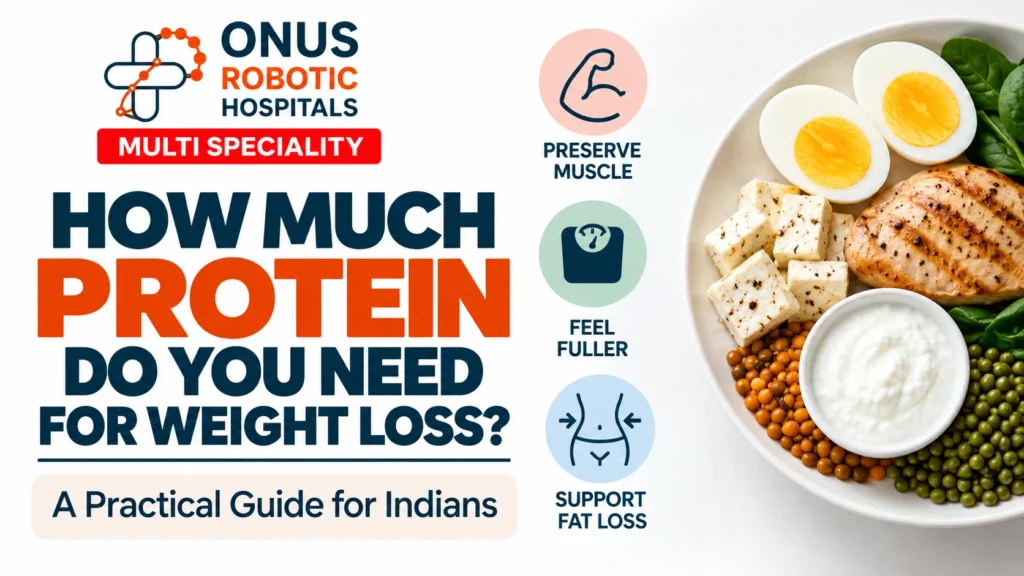
When most people decide to lose weight, they focus on reducing calories and eating less. While creating a calorie deficit is important, many people overlook one of the most critical nutrients for successful weight loss—protein.
The goal of healthy weight loss is not simply to reduce the number on the weighing scale. The real objective is to reduce excess body fat while preserving muscle mass, maintaining strength, and improving metabolic health.
Protein plays a vital role in this process. It supports muscle preservation, helps control hunger, improves satiety, and contributes to better long-term weight management.
At ONUS Robotic Hospital, Hyderabad, Dr. P. Ravi Kiran emphasizes a structured approach to weight management that combines nutrition, exercise, lifestyle modification, and metabolic monitoring for sustainable results.
What Is Protein?
Protein is one of the three major macronutrients required by the human body:
- Protein
- Carbohydrates
- Fats
Proteins are made up of amino acids, which are essential for:
- Muscle growth and repair
- Skin and hair health
- Hormone production
- Enzyme function
- Immune system support
- Tissue healing and recovery
Protein is not only for athletes or bodybuilders—it is essential for everyone, especially individuals trying to lose weight.
Why Protein Is Important During Weight Loss
When calorie intake is reduced, the body begins using stored energy sources. Ideally, most of the weight lost should come from body fat.
Without adequate protein intake, the body may also break down muscle tissue during weight loss.
Adequate protein helps:
✔ Preserve lean muscle mass
✔ Improve satiety and fullness
✔ Reduce cravings and snacking
✔ Support recovery after exercise
✔ Improve body composition
✔ Enhance metabolic health
The goal is to lose fat—not muscle.
Protein Helps Control Hunger
One reason many diets fail is persistent hunger.
Protein-rich meals tend to be more filling than meals high in refined carbohydrates alone.
People who consume adequate protein often experience:
- Reduced hunger
- Better portion control
- Less frequent snacking
- Improved dietary adherence
This makes weight-loss plans easier to sustain over time.
How Much Protein Do You Need?
Protein requirements vary based on:
- Age
- Gender
- Body weight
- Physical activity level
- Muscle mass
- Medical conditions
- Weight-loss goals
For many healthy adults attempting weight loss, a commonly used range is:
1.2–1.6 grams of protein per kilogram of body weight per day
This is a general guideline and should not be considered a universal prescription.
Example
An adult weighing 80 kg may require approximately:
- Minimum: 96 g protein/day
- Higher target: 128 g protein/day
However, protein targets should be individualized, especially for people with obesity, kidney disease, or other medical conditions.
Why Protein Matters More After Age 40
As we age, maintaining muscle mass becomes increasingly difficult.
Age-related muscle loss can contribute to:
- Reduced metabolism
- Weakness
- Increased body fat
- Poor balance
- Reduced mobility
After age 40, combining:
Protein + Strength Training
becomes particularly important for maintaining muscle and supporting healthy aging.
The goal should be:
Lighter, Stronger, and Metabolically Healthier.
Best Protein Sources for Indians
Eggs
A high-quality protein source that is affordable and convenient.
Protein: ~6–7 g per egg
Fish
Rich in protein and healthy fats.
Examples:
- Rohu
- Catla
- Sardines
- Mackerel
- Pomfret
Protein: ~20–25 g per 100 g
Chicken
Lean chicken provides excellent protein with relatively low carbohydrate content.
Protein: ~25–30 g per 100 g
Dal
Provides protein, fibre, and important nutrients.
Protein: ~8–12 g per cooked cup
Beans and Legumes
Examples include:
- Rajma
- Chana
- Black chana
- Green gram
These offer both protein and fibre.
Paneer
An excellent vegetarian protein source.
Protein: ~18–20 g per 100 g
Curd and Greek Yogurt
Greek yogurt contains higher protein compared to regular curd.
Protein: ~8–10 g per 100 g
Soy and Tofu
Ideal options for vegetarians and vegans.
Examples:
- Soy chunks
- Soybeans
- Tofu
- Unsweetened soy milk
Milk
Provides protein along with calcium and other nutrients.
Nuts and Seeds
Examples:
- Almonds
- Walnuts
- Chia seeds
- Pumpkin seeds
- Flax seeds
Consume in moderation due to their calorie density.
Approximate Protein Content of Common Foods
| Food | Protein |
|---|---|
| 1 Egg | 6–7 g |
| 100 g Chicken | 25–30 g |
| 100 g Fish | 20–25 g |
| 100 g Paneer | 18–20 g |
| 100 g Tofu | 8–15 g |
| 1 Cup Dal | 8–12 g |
| 100 g Greek Yogurt | 8–10 g |
| 30 g Almonds | 6 g |
Values may vary depending on preparation and brand.
Protein Distribution Throughout the Day
Many people consume very little protein during breakfast and lunch and then consume most of it at dinner.
A better strategy is to distribute protein evenly throughout the day.
Breakfast
- Eggs
- Curd
- Moong dal chilla
Lunch
- Chicken, fish, dal, or paneer
- Vegetables
- Controlled rice or roti portion
Evening Snack
- Greek yogurt
- Protein-rich snack
Dinner
- Fish, chicken, paneer, or tofu
- Vegetables
Spreading protein intake across meals may support muscle maintenance and improve satiety.
The Indian Breakfast Challenge
Many traditional breakfasts are carbohydrate-heavy:
- Idli
- Dosa
- Upma
- Poha
- Pongal
Instead of eliminating them, add protein.
Examples:
- Idli + Sambar + Eggs
- Dosa + Curd
- Upma + Eggs
- Moong Dal Chilla + Yogurt
Small modifications can make meals more balanced and filling.
Can Vegetarians Get Enough Protein?
Absolutely.
Excellent vegetarian protein sources include:
- Dal
- Rajma
- Chana
- Soy
- Tofu
- Paneer
- Milk
- Curd
- Greek Yogurt
With proper planning, vegetarians can easily achieve adequate protein intake.
Do You Need Protein Powder?
Not necessarily.
Protein powders are convenience products, not essential weight-loss tools.
They may be useful when:
- Protein requirements are high
- Appetite is low
- Meal preparation is difficult
- Post-workout nutrition is needed
Many people can meet their protein needs through whole foods alone.
Protein and Kidney Health
One common myth is that protein automatically damages the kidneys.
For most healthy individuals, an appropriate protein intake is generally well tolerated.
However, people with:
- Chronic kidney disease
- Reduced kidney function
- Significant proteinuria
should seek medical guidance before increasing protein intake significantly.
Protein Alone Does Not Cause Weight Loss
Many people assume that simply eating more protein will automatically reduce body fat.
Weight loss still requires:
- Calorie control
- Physical activity
- Strength training
- Consistent habits
Protein supports the process but is not a substitute for a balanced weight-management strategy.
Protein and Strength Training: The Perfect Combination
Protein helps maintain muscle, but muscles also need a reason to stay.
That reason is:
Resistance Training
Examples include:
- Squats
- Lunges
- Resistance bands
- Push-ups
- Dumbbells
- Weight machines
The most effective combination is:
Adequate Protein + Resistance Training + Recovery
Common Protein Mistakes
1. Eating Most Protein Only at Dinner
Spread intake throughout the day.
2. Relying Only on Protein Powders
Whole foods should remain the foundation.
3. Ignoring Vegetables and Fibre
Balanced nutrition is essential.
4. Overeating High-Calorie Protein Foods
Paneer, nuts, and cheese still contain calories.
5. Skipping Strength Training
Protein alone cannot preserve muscle optimally.
6. Following High-Protein Diets Despite Kidney Disease
Medical supervision is important.
7. Believing Protein Alone Burns Fat
Overall calorie balance still matters.
A Simple Protein Plate Method
A practical meal structure:
½ Plate
Vegetables and salad
¼ Plate
Protein-rich foods
¼ Plate
Rice, roti, millet, or other carbohydrate sources
This simple framework helps improve nutrition quality and satiety.
Frequently Asked Questions
Can protein help me lose belly fat?
Protein supports satiety and muscle preservation. Combined with calorie control and exercise, it can contribute to overall fat loss, including abdominal fat.
Is whey protein necessary?
No. It is a convenient option but not essential.
Can diabetics eat a high-protein diet?
Protein can be beneficial, but dietary plans should be individualized based on diabetes control, medications, and kidney health.
Is protein safe for older adults?
Yes. Adequate protein is particularly important for preserving muscle mass during aging.
What is better for weight loss—protein or calorie control?
Both are important. Calorie deficit drives weight loss, while protein helps preserve muscle and improve satiety.
Conclusion
Successful weight loss is not simply about eating less—it is about eating smarter.
Adequate protein intake can help:
- Preserve muscle
- Reduce hunger
- Improve body composition
- Support exercise performance
- Enhance long-term metabolic health
The ideal weight-loss strategy combines:
✔ Adequate Protein
✔ Calorie Control
✔ Strength Training
✔ Daily Physical Activity
✔ Good Sleep
✔ Consistent Nutrition Habits
Remember, the goal is not just to become lighter.
The goal is to become:
Leaner. Stronger. Healthier.
About Dr. P. Ravi Kiran
Dr. P. Ravi Kiran is a General Physician, Diabetologist, and Preventive Medicine Specialist at ONUS Robotic Hospital, Hyderabad.
His clinical expertise includes:
- Obesity Management
- Medical Weight Loss
- Insulin Resistance
- Prediabetes
- Type 2 Diabetes
- Diabetes Remission
- Fatty Liver Disease
- Metabolic Syndrome
- Lifestyle Medicine
- Preventive Healthcare
He focuses on sustainable fat loss, muscle preservation, and long-term metabolic health through individualized treatment plans.