Introduction
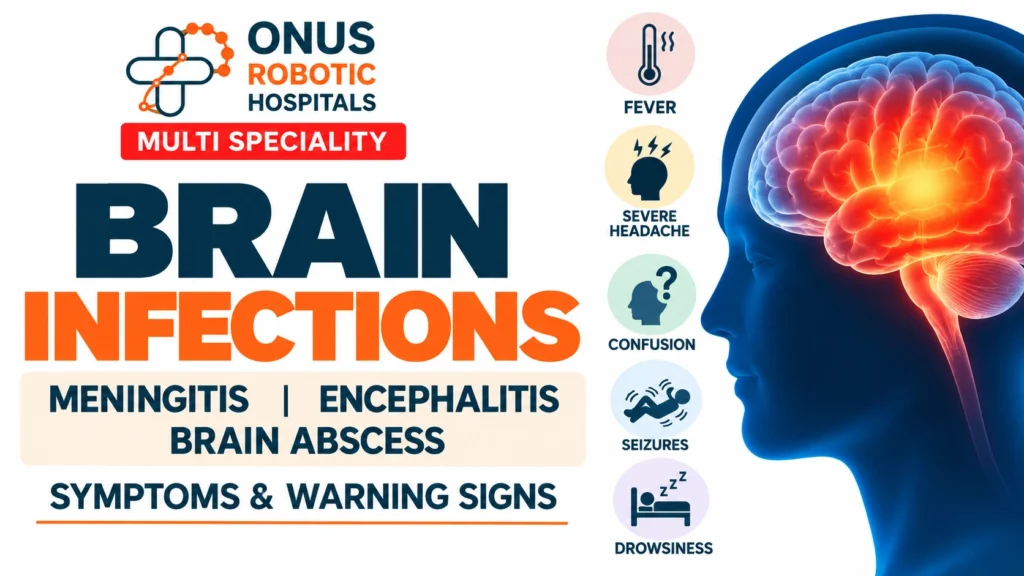
Fever is a common illness that most people experience several times in their lives. However, when fever is accompanied by severe headache, confusion, seizures, unusual drowsiness, altered behavior, or loss of consciousness, it should never be ignored.
In some cases, these symptoms may indicate a serious infection affecting the brain or surrounding nervous system structures. Conditions such as Meningitis, Encephalitis, and Brain Abscess require prompt medical evaluation and treatment.
In this article, Dr. P. Ravi Kiran, General Physician and Infectious Disease Specialist at ONUS Robotic Hospitals, explains the different types of brain infections, their symptoms, warning signs, diagnosis, and treatment approaches.
What Are Brain Infections?
Brain infections occur when microorganisms such as bacteria, viruses, fungi, or parasites infect the brain or its surrounding protective tissues.
Depending on the area affected, brain infections are classified into:
1. Meningitis
Infection and inflammation of the protective membranes covering the brain and spinal cord, known as the meninges.
2. Encephalitis
Inflammation of the brain tissue itself, often caused by viral infections.
3. Brain Abscess
A collection of pus within the brain caused by a localized infection.
Although these conditions differ, they can sometimes produce similar symptoms and may become life-threatening if not treated promptly.
What Is Meningitis?
Meningitis is inflammation of the meninges—the protective layers surrounding the brain and spinal cord.
It can be caused by:
- Bacterial infections
- Viral infections
- Fungal infections
- Tuberculosis
- Certain inflammatory conditions
Bacterial meningitis is considered a medical emergency because it can progress rapidly and lead to severe complications.
Common Symptoms of Meningitis
Symptoms may include:
- High fever
- Severe headache
- Neck stiffness
- Sensitivity to light
- Nausea and vomiting
- Confusion
- Drowsiness
- Seizures
- Altered mental status
Important Note
Many people believe that neck stiffness is always present in meningitis.
However, neck stiffness may not occur in every patient, especially in children, older adults, or individuals with weakened immune systems.
Therefore, absence of neck stiffness does not rule out meningitis.
What Is Encephalitis?
Encephalitis refers to inflammation of the brain tissue itself.
The most common causes include:
- Viral infections
- Herpes simplex virus (HSV)
- Japanese encephalitis virus
- Dengue-related neurological complications
- Autoimmune conditions affecting the brain
Because the brain tissue is directly involved, encephalitis often causes neurological symptoms.
Symptoms of Encephalitis
Patients may experience:
- Fever
- Severe headache
- Confusion
- Memory disturbances
- Personality changes
- Abnormal behavior
- Difficulty speaking
- Seizures
- Weakness
- Reduced consciousness
In severe cases, encephalitis may lead to coma or permanent neurological damage if not treated early.
What Is a Brain Abscess?
A brain abscess is a localized collection of infected material and pus inside the brain.
It can develop when infection spreads from:
- Ear infections
- Sinus infections
- Dental infections
- Lung infections
- Bloodstream infections
- Head injuries
- Previous neurosurgical procedures
Brain abscesses are uncommon but potentially serious.
Symptoms of Brain Abscess
Common symptoms include:
- Persistent headache
- Fever
- Nausea and vomiting
- Seizures
- Weakness in an arm or leg
- Speech difficulties
- Vision changes
- Confusion
- Altered consciousness
Symptoms may develop gradually over days or weeks.
Meningitis vs Encephalitis: What Is the Difference?
| Feature | Meningitis | Encephalitis |
|---|---|---|
| Primary Area Affected | Brain coverings (meninges) | Brain tissue |
| Fever | Common | Common |
| Severe Headache | Common | Common |
| Neck Stiffness | More common | Less common |
| Confusion | May occur | Often prominent |
| Seizures | Possible | More common |
| Personality Changes | Less common | More common |
| Memory Problems | Uncommon | Common |
Sometimes both conditions occur together, known as Meningoencephalitis.
Warning Signs That Should Never Be Ignored
Seek urgent medical attention if fever is associated with:
🚨 Severe headache
🚨 Confusion or disorientation
🚨 Seizures
🚨 Sudden drowsiness
🚨 Difficulty speaking
🚨 Weakness in limbs
🚨 Altered behavior
🚨 Loss of consciousness
🚨 Persistent vomiting
🚨 Unusual neurological symptoms
These symptoms may indicate serious involvement of the brain or nervous system.
How Do Doctors Diagnose Brain Infections?
Diagnosis requires a combination of clinical evaluation and specialized investigations.
Depending on the situation, doctors may recommend:
Blood Tests
- Complete Blood Count (CBC)
- CRP
- ESR
- Blood cultures
- Infection markers
Brain Imaging
- CT Scan
- MRI Brain
MRI often provides more detailed information about brain tissue and possible infection.
Lumbar Puncture (Spinal Tap)
A sample of cerebrospinal fluid (CSF) may be collected and analyzed to identify:
- Bacterial infections
- Viral infections
- Tuberculosis
- Fungal infections
Additional Testing
Depending on the suspected cause, specialized laboratory tests may also be performed.
Why Early Diagnosis Matters
Brain infections can progress rapidly.
Delayed treatment may increase the risk of:
- Permanent neurological damage
- Hearing loss
- Memory impairment
- Cognitive problems
- Recurrent seizures
- Stroke-like complications
- Coma
- Death
Prompt diagnosis allows timely treatment and improves outcomes.
How Are Brain Infections Treated?
Treatment depends on the underlying cause.
Bacterial Meningitis
May require:
- Intravenous antibiotics
- Hospitalization
- Supportive care
Viral Encephalitis
Treatment may include:
- Antiviral medications in selected cases
- Supportive management
- Monitoring neurological status
Brain Abscess
Management may involve:
- Antibiotics
- Neurosurgical drainage when required
- Imaging follow-up
Treatment decisions are individualized based on the patient’s condition and the specific infection involved.
Can Brain Infections Be Prevented?
While not all infections can be prevented, certain measures may reduce risk:
- Vaccinations when recommended
- Early treatment of ear and sinus infections
- Proper hygiene practices
- Mosquito bite prevention
- Managing chronic illnesses
- Seeking medical care for persistent fever
When Should You See a Doctor?
Consult a healthcare professional immediately if fever is accompanied by:
- Severe headache
- Confusion
- Seizures
- Persistent vomiting
- Altered consciousness
- Neurological symptoms
Do not attempt self-medication when these symptoms are present.
The ONUS Robotic Hospitals Approach
At ONUS Robotic Hospitals, patients with suspected brain infections receive comprehensive evaluation through:
- Detailed clinical assessment
- Advanced laboratory testing
- Neuroimaging support
- Infectious disease consultation
- Multidisciplinary management
Early recognition and timely treatment remain the most important factors in improving outcomes.
Conclusion
Brain infections such as Meningitis, Encephalitis, and Brain Abscess are serious medical conditions that require prompt attention.
Remember this important warning:
Fever + Severe Headache + Confusion, Seizures, or Altered Consciousness should never be ignored.
While not every fever with headache indicates a brain infection, the presence of neurological symptoms warrants urgent medical evaluation.
Early diagnosis, appropriate investigations, and timely treatment can make a significant difference in recovery and long-term health.
About Dr. P. Ravi Kiran
Dr. P. Ravi Kiran is a General Physician, Diabetologist, and Infectious Disease Specialist at ONUS Robotic Hospitals, Hyderabad.
His areas of expertise include:
- Infectious Diseases
- Fever Evaluation
- Tropical Infections
- Dengue
- Scrub Typhus
- Meningitis
- Encephalitis
- Sepsis
- Diabetes Care
- Preventive Medicine
For persistent fever, unexplained neurological symptoms, or infectious disease concerns, consult Dr. P. Ravi Kiran at ONUS Robotic Hospitals for expert evaluation and care.