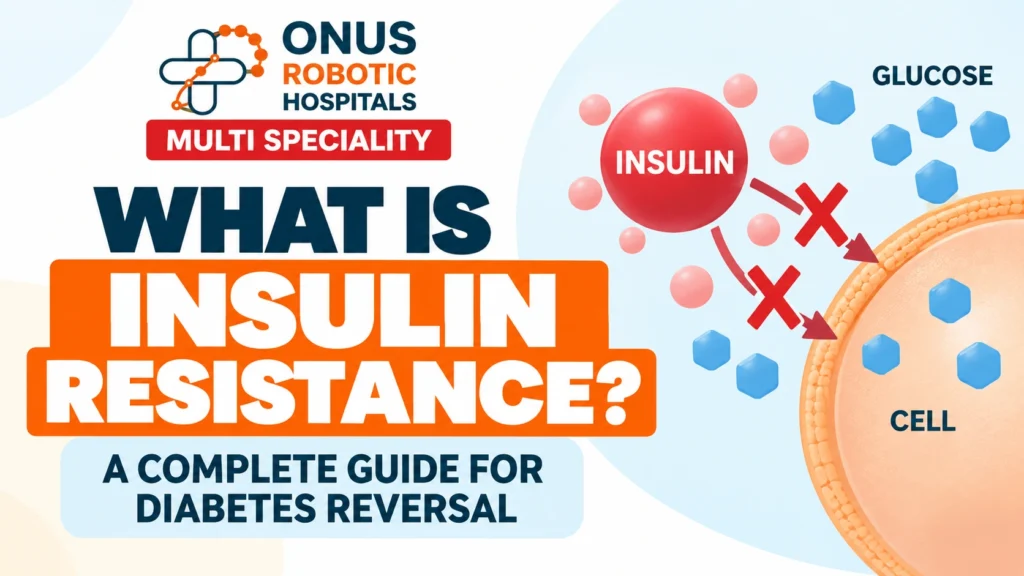
Insulin resistance is one of the most important metabolic conditions associated with prediabetes, type 2 diabetes, obesity, fatty liver disease, and metabolic syndrome. It often develops silently, sometimes years before diabetes is diagnosed. Understanding insulin resistance is essential for anyone looking to improve metabolic health, prevent diabetes, or work toward type 2 diabetes remission.
At ONUS Robotic Hospitals, Hyderabad, Dr. P. Ravi Kiran focuses on identifying insulin resistance early and helping patients improve insulin sensitivity through lifestyle modifications, weight management, nutrition, exercise, and evidence-based medical care.
What Is Insulin?
Insulin is a hormone produced by the pancreas that helps regulate blood sugar levels. After eating, carbohydrates are broken down into glucose, which enters the bloodstream. Insulin acts like a key, allowing glucose to move from the blood into cells where it can be used for energy.
A healthy insulin response helps maintain stable blood sugar levels and supports normal metabolism.
What Is Insulin Resistance?
Insulin resistance occurs when the body’s cells become less responsive to insulin. As a result, the pancreas must produce more insulin to keep blood sugar levels within the normal range.
Initially, blood glucose may remain normal because the pancreas compensates by increasing insulin production. Over time, however, this increased demand can strain the pancreas and contribute to rising blood sugar levels.
The progression often follows this pattern:
Normal Blood Sugar → Insulin Resistance → High Insulin Levels → Prediabetes → Type 2 Diabetes
Not everyone with insulin resistance develops diabetes, but the risk increases significantly when insulin resistance remains untreated.
Why Insulin Resistance Matters
Insulin resistance is closely linked to several metabolic disorders, including:
- Prediabetes
- Type 2 Diabetes
- Obesity
- Fatty Liver Disease
- Metabolic Syndrome
- High Blood Pressure
- Elevated Triglycerides
- Cardiovascular Disease
Because it affects multiple aspects of health, insulin resistance should be viewed as a metabolic condition rather than simply a blood sugar problem.
How Does Insulin Resistance Develop?
Several factors can contribute to insulin resistance.
1. Excess Visceral Fat
Visceral fat is the fat stored around internal organs. Unlike subcutaneous fat under the skin, visceral fat is metabolically active and strongly associated with insulin resistance.
2. Physical Inactivity
Muscles are major users of glucose. When physical activity levels decrease, glucose utilization falls, contributing to insulin resistance.
3. Genetics
Family history can increase susceptibility to insulin resistance and type 2 diabetes.
4. Poor Sleep
Chronic sleep deprivation can negatively affect hormones that regulate metabolism and insulin sensitivity.
5. Aging
Insulin sensitivity may gradually decline with age, especially when accompanied by reduced muscle mass and physical inactivity.
6. Certain Medical Conditions
Conditions such as obesity, PCOS, metabolic syndrome, and fatty liver disease often coexist with insulin resistance.
What Is Hyperinsulinemia?
Hyperinsulinemia refers to higher-than-normal insulin levels in the bloodstream.
This often occurs during the early stages of insulin resistance when the pancreas compensates by producing extra insulin.
A person may have:
- Normal fasting glucose
- Normal HbA1c
- Elevated insulin levels
This is why metabolic dysfunction may begin long before diabetes is diagnosed.
Can You Have Insulin Resistance With Normal Blood Sugar?
Yes.
Many people assume normal blood sugar means normal metabolic health.
However, insulin resistance can exist for years before blood sugar rises into the prediabetes or diabetes range.
This is one reason why individuals with risk factors such as obesity, fatty liver, family history of diabetes, or abdominal obesity should undergo regular metabolic assessments.
Common Signs Associated With Insulin Resistance
Insulin resistance itself often causes no symptoms.
However, associated signs may include:
- Increasing belly fat
- Weight gain
- Prediabetes
- High triglycerides
- Low HDL cholesterol
- Fatty liver
- Elevated blood pressure
- Difficulty losing weight
Some individuals may develop Acanthosis Nigricans, a condition characterized by dark, thickened skin commonly seen around the neck, armpits, or groin.
Why Belly Fat Is a Warning Sign
Not all body fat behaves the same way.
Visceral fat produces inflammatory substances and metabolic signals that can worsen insulin resistance.
People with increased waist circumference are more likely to develop:
- Prediabetes
- Type 2 Diabetes
- Fatty Liver Disease
- Cardiovascular Disease
Monitoring waist circumference is often as important as monitoring body weight.
Can Thin People Have Insulin Resistance?
Absolutely.
This is particularly common among South Asians and Indians.
A person may have:
- Normal body weight
- Normal BMI
Yet still have:
- Excess visceral fat
- Fatty liver
- Prediabetes
- Insulin resistance
This phenomenon is sometimes referred to as being “thin outside, fat inside.”
Insulin Resistance and Prediabetes
Prediabetes occurs when blood sugar levels rise above normal but remain below the threshold for diabetes.
Insulin resistance is one of the most common underlying causes.
Without intervention, prediabetes can progress to type 2 diabetes.
The encouraging news is that prediabetes often responds very well to lifestyle changes and weight management.
Insulin Resistance and Fatty Liver Disease
Fatty liver and insulin resistance frequently occur together.
When excess fat accumulates in the liver, it can worsen insulin resistance and contribute to abnormal glucose regulation.
This creates a cycle:
Insulin Resistance → Fatty Liver → Worse Insulin Resistance
Breaking this cycle through weight loss and lifestyle improvement can significantly improve metabolic health.
How Is Insulin Resistance Diagnosed?
There is currently no single test routinely used to diagnose insulin resistance in clinical practice.
Doctors often assess the overall metabolic picture using:
- Fasting Blood Sugar
- HbA1c
- Lipid Profile
- Waist Circumference
- Body Mass Index (BMI)
- Blood Pressure
- Liver Function Tests
- Medical History
- Family History
In selected cases, fasting insulin levels and HOMA-IR calculations may be used to estimate insulin resistance.
Can Insulin Resistance Be Reversed?
Insulin sensitivity can improve substantially in many individuals.
Improvement depends on consistency and long-term lifestyle changes rather than quick fixes.
Strategies that can improve insulin sensitivity include:
Weight Loss
Reducing excess body fat, especially visceral fat, is one of the most effective interventions.
Regular Exercise
Exercise improves glucose uptake and insulin sensitivity.
Strength Training
Building muscle increases the body’s capacity to use glucose effectively.
Better Nutrition
A diet rich in protein, vegetables, fibre, and minimally processed foods can support metabolic health.
Sleep Optimization
Aim for 7–9 hours of quality sleep per night.
Stress Management
Reducing chronic stress may positively influence metabolic function.
Best Foods for Improving Insulin Sensitivity
A balanced diet can help improve insulin resistance.
Focus on:
Protein Sources
- Eggs
- Fish
- Chicken
- Paneer
- Tofu
- Dal
- Greek Yogurt
High-Fibre Foods
- Vegetables
- Fruits
- Pulses
- Whole Grains
- Legumes
Healthy Fats
- Nuts
- Seeds
- Olive Oil
- Fatty Fish
Reduce
- Sugary drinks
- Ultra-processed foods
- Excess sweets
- Refined carbohydrates
No single “superfood” reverses insulin resistance. Consistency matters more than perfection.
Why Exercise Is One of the Best Treatments
Exercise improves insulin sensitivity even without dramatic weight loss.
Aerobic Exercise
- Walking
- Cycling
- Swimming
- Jogging
Resistance Training
- Weight Training
- Resistance Bands
- Bodyweight Exercises
Combining aerobic and resistance training often provides the greatest metabolic benefit.
A Simple 30-Day Insulin Resistance Improvement Plan
Week 1
Eliminate sugary beverages.
Week 2
Walk for 10–15 minutes after meals.
Week 3
Add resistance training 2–3 times weekly.
Week 4
Increase protein intake and improve meal quality.
Continue these habits beyond 30 days for long-term benefits.
Frequently Asked Questions
Is insulin resistance the same as diabetes?
No. Insulin resistance can exist years before diabetes develops.
Can insulin resistance be reversed?
Insulin sensitivity can improve significantly through weight loss, exercise, and lifestyle changes.
Does insulin resistance always lead to diabetes?
No. Early intervention can reduce or delay progression.
Can thin people have insulin resistance?
Yes. Especially among South Asians and individuals with excess visceral fat.
What is the best exercise for insulin resistance?
A combination of walking, aerobic activity, and strength training.
Conclusion
Insulin resistance is often the hidden metabolic problem behind prediabetes, type 2 diabetes, belly fat, fatty liver, and metabolic syndrome.
The good news is that insulin sensitivity can improve substantially through healthy lifestyle changes, weight management, exercise, proper nutrition, and early medical intervention.
Rather than focusing only on lowering blood sugar, the goal should be to improve overall metabolic health, reduce visceral fat, build muscle, and create sustainable habits that support long-term wellness.