Introduction
Many people assume diabetes develops suddenly. In reality, the process often begins years earlier with a condition called insulin resistance.
Insulin resistance occurs when the body’s cells stop responding efficiently to insulin, the hormone responsible for helping glucose enter cells for energy. To compensate, the pancreas produces more insulin. Over time, this can lead to elevated blood sugar levels, prediabetes, and eventually type 2 diabetes.
The challenge is that insulin resistance often develops silently. Many people may not notice obvious symptoms until significant metabolic damage has already occurred.
Recognizing the early warning signs can help you take action before diabetes develops and improve your long-term health.
What Is Insulin Resistance?
Insulin acts like a key that unlocks cells so glucose can enter and be used for energy.
When cells become resistant to insulin:
- The pancreas produces more insulin
- Insulin levels remain elevated
- Fat storage increases
- Blood sugar gradually rises
- Risk of type 2 diabetes increases
Insulin resistance is also closely linked to obesity, fatty liver disease, high blood pressure, heart disease, and metabolic syndrome.
1. Increasing Waist Circumference
One of the earliest visible signs of insulin resistance is the accumulation of fat around the abdomen.
This type of fat, known as visceral fat, surrounds internal organs and contributes significantly to metabolic dysfunction.
Warning Signs:
- Growing waistline despite stable weight
- Difficulty losing belly fat
- Clothes fitting tighter around the waist
- Increased abdominal girth
Research shows that abdominal obesity is strongly associated with insulin resistance and future diabetes risk.
Why It Matters
Visceral fat releases inflammatory chemicals and hormones that reduce insulin sensitivity, making insulin resistance worse over time.
2. Prediabetes
Prediabetes occurs when blood sugar levels are higher than normal but not yet high enough to be diagnosed as diabetes.
Many individuals discover prediabetes during routine blood tests.
Common Blood Test Findings:
- Fasting Blood Sugar: 100–125 mg/dL
- HbA1c: 5.7%–6.4%
Prediabetes is one of the strongest indicators that insulin resistance may already be present.
Why Early Action Helps
Lifestyle modifications during the prediabetes stage can significantly reduce the risk of progressing to type 2 diabetes.
3. High Triglycerides
Triglycerides are a type of fat found in the bloodstream.
When insulin resistance develops, the liver often produces excess triglycerides.
Signs Seen in Blood Tests:
- Elevated triglyceride levels
- Abnormal cholesterol profile
- Increased cardiovascular risk
High triglycerides frequently occur alongside:
- Abdominal obesity
- Prediabetes
- Fatty liver
- High blood pressure
This combination strongly suggests underlying metabolic dysfunction.
4. Low HDL (Good Cholesterol)
HDL cholesterol helps remove excess cholesterol from the bloodstream.
People with insulin resistance often have:
- Low HDL cholesterol
- High triglycerides
- Increased cardiovascular risk
Why It Matters
Low HDL does not diagnose insulin resistance on its own, but when combined with other metabolic abnormalities, it becomes an important warning sign.
5. Fatty Liver Disease
Fatty liver disease occurs when excess fat accumulates inside liver cells.
Many individuals have fatty liver without experiencing symptoms.
Possible Indicators:
- Elevated liver enzymes
- Fatty liver seen on ultrasound
- Unexplained fatigue
- Mild discomfort in the upper abdomen
Fatty liver and insulin resistance frequently occur together and can worsen one another.
Why It Matters
Fat accumulation in the liver further reduces insulin sensitivity and increases diabetes risk.
6. High Blood Pressure
High blood pressure is another common condition associated with insulin resistance.
How They Are Connected
Insulin resistance may contribute to:
- Increased sodium retention
- Blood vessel dysfunction
- Chronic inflammation
These factors can raise blood pressure over time.
Warning Signs:
- Blood pressure readings above normal
- Frequent headaches
- Dizziness
- Family history of hypertension
Many people with insulin resistance also develop hypertension years before diabetes is diagnosed.
7. Dark Skin Around the Neck or Armpits (Acanthosis Nigricans)
Acanthosis nigricans is a skin condition commonly associated with elevated insulin levels.
What It Looks Like
Dark, thickened, velvety skin patches may appear around:
- Neck
- Armpits
- Groin
- Elbows
- Knuckles
These changes can develop gradually and may be mistaken for poor hygiene.
Why It Matters
High insulin levels stimulate skin cells, leading to the characteristic darkened appearance.
8. Unexplained Weight Gain
Weight gain can have many causes, but persistent weight gain—especially around the abdomen—may indicate worsening insulin resistance.
Common Complaints:
- Difficulty losing weight
- Frequent hunger
- Weight gain despite dieting
- Increased belly fat
High insulin levels promote fat storage and make it harder for the body to burn stored fat for energy.
9. Elevated Fasting or Post-Meal Blood Sugar
As insulin resistance progresses, blood glucose levels may begin to rise.
Possible Findings:
- Elevated fasting blood sugar
- High post-meal glucose readings
- Prediabetes diagnosis
By the time glucose levels become abnormal, insulin resistance may have been developing for years.
This is why early metabolic screening is important.
10. Metabolic Syndrome
Metabolic syndrome is a cluster of risk factors that often occur together.
Diagnostic Features Include:
- Abdominal obesity
- Elevated blood pressure
- High triglycerides
- Low HDL cholesterol
- Elevated blood sugar
Having metabolic syndrome significantly increases the risk of:
- Type 2 diabetes
- Heart disease
- Stroke
Insulin resistance is considered one of the primary drivers behind this condition.
What About Fatigue?
Fatigue is commonly reported by people concerned about insulin resistance.
However, fatigue can result from many conditions including:
- Poor sleep
- Anaemia
- Stress
- Thyroid disorders
- Infections
- High blood sugar
Fatigue alone should never be used to diagnose insulin resistance.
What About Sugar Cravings?
Sugar cravings are often blamed on insulin resistance, but they are not specific enough to be considered a reliable symptom.
Cravings can also result from:
- Sleep deprivation
- Skipping meals
- Stress
- Emotional eating
- Habitual consumption of sugary foods
A proper medical evaluation is needed to determine whether insulin resistance is present.
Can Insulin Resistance Exist Without Symptoms?
Yes.
Many people with insulin resistance feel completely healthy.
The condition is often discovered through routine health screenings, blood tests, or investigations for other metabolic conditions.
This is why preventive health check-ups are so important.
Who Is at Higher Risk?
You may be at increased risk if you have:
- Family history of type 2 diabetes
- Overweight or obesity
- Increased waist circumference
- Prediabetes
- Gestational diabetes history
- Sedentary lifestyle
- High blood pressure
- Fatty liver disease
- Polycystic Ovary Syndrome (PCOS)
How to Improve Insulin Sensitivity
The good news is that insulin resistance can often be improved through lifestyle changes.
Effective Strategies:
✅ Lose excess weight
✅ Exercise at least 150 minutes per week
✅ Reduce sugary foods and refined carbohydrates
✅ Increase protein and fiber intake
✅ Improve sleep quality
✅ Manage stress
✅ Avoid smoking
✅ Follow medical advice regularly
Even modest weight loss can lead to significant improvements in insulin sensitivity.
Frequently Asked Questions
What is the first sign of insulin resistance?
There is no single first sign. Many people notice increasing belly fat, abnormal blood tests, or prediabetes before other symptoms appear.
Does belly fat always mean insulin resistance?
No. However, excess abdominal fat is strongly associated with insulin resistance and metabolic disease.
Can insulin resistance be reversed?
In many cases, insulin sensitivity can improve significantly through weight loss, exercise, healthy eating, and lifestyle modifications.
Does fatty liver indicate insulin resistance?
Fatty liver disease frequently occurs alongside insulin resistance, although individual evaluation is necessary.
Conclusion
Insulin resistance often develops quietly, long before type 2 diabetes appears.
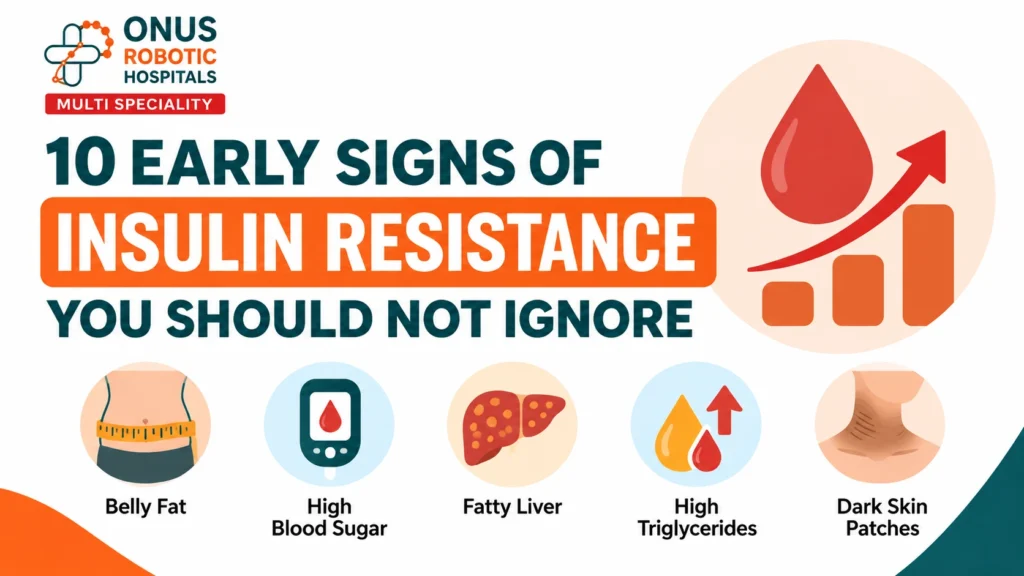
Paying attention to early warning signs such as belly fat, prediabetes, high triglycerides, fatty liver, high blood pressure, and acanthosis nigricans can help identify metabolic problems early.
The earlier you take action, the greater the opportunity to improve insulin sensitivity, prevent diabetes, and protect your long-term health.
Remember: Insulin resistance is often reversible when detected early and addressed with the right lifestyle changes.