Introduction
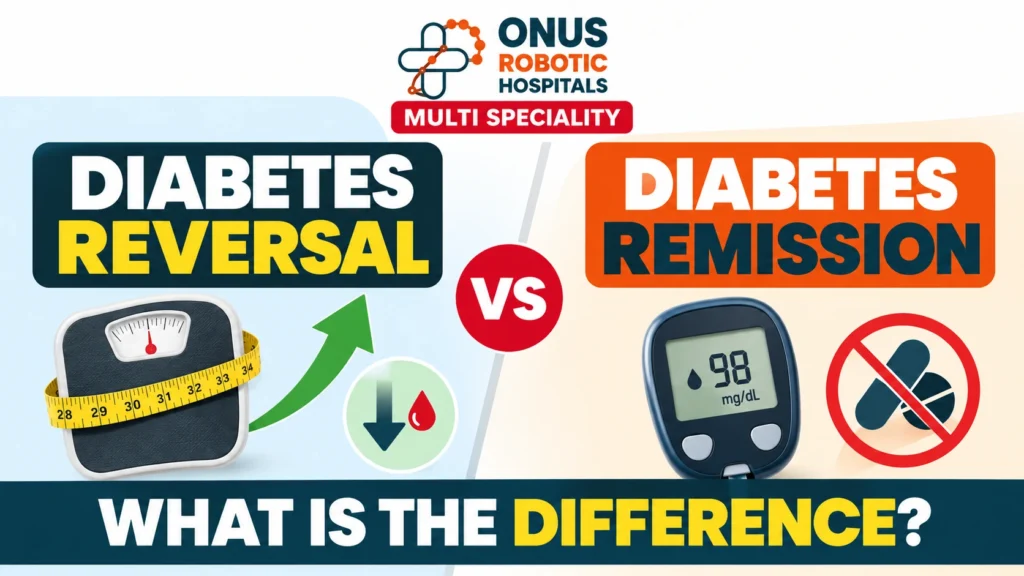
The phrase “diabetes reversal” has become increasingly popular among people searching for ways to improve their blood sugar levels and reduce dependence on medication. Social media, health blogs, and weight-loss programs frequently promote the idea of reversing diabetes.
However, healthcare professionals and medical researchers often use a different term:
Diabetes Remission
Understanding the difference between diabetes reversal, remission, and cure is important because these terms are not interchangeable.
While some individuals with Type 2 Diabetes can achieve remarkable improvements in blood sugar control, the scientific and medical community generally prefers the term remission because it more accurately reflects what is happening inside the body.
At ONUS Robotic Hospitals, Hyderabad, Dr. P. Ravi Kiran focuses on helping patients understand the science behind diabetes and adopt evidence-based strategies to improve long-term metabolic health.
Understanding Type 2 Diabetes
Type 2 Diabetes develops when the body becomes resistant to insulin and the pancreas gradually struggles to produce enough insulin to maintain normal blood sugar levels.
The progression often follows this pattern:
Insulin Resistance
↓
Prediabetes
↓
Type 2 Diabetes
↓
Long-Term Metabolic Complications
The condition is influenced by multiple factors, including:
- Genetics
- Excess body weight
- Visceral fat
- Physical inactivity
- Poor sleep
- Dietary habits
- Age
- Hormonal factors
Because Type 2 Diabetes is a chronic metabolic disease, the terminology used to describe improvement matters.
What Is Diabetes Reversal?
The term diabetes reversal is widely used by patients, media outlets, and wellness programs.
In general, it refers to a situation where:
- Blood sugar levels return to normal or near-normal levels
- Diabetes medications are reduced or stopped
- Insulin sensitivity improves
- Significant weight loss occurs
- Overall metabolic health improves
Many people find the term motivating because it suggests progress and hope.
However, the challenge is that there is no universally accepted medical definition for diabetes reversal.
Different programs may use different criteria.
This is one reason medical organizations prefer the term remission.
What Is Diabetes Remission?
Diabetes remission is a medically recognized term used by international diabetes experts.
The most commonly accepted definition is:
HbA1c Below 6.5% For At Least Three Months Without Usual Glucose-Lowering Medication
This definition helps create consistency and clarity.
Remission indicates that blood sugar levels have improved significantly and remained below the diabetes threshold for a sustained period without the need for standard diabetes medication.
Understanding Remission Through Examples
Patient A
HbA1c: 6.2%
Taking:
- Metformin
- Additional diabetes medications
This represents:
Good diabetes control
But not remission.
Patient B
HbA1c: 6.2%
Stopped medication two weeks ago.
This shows improvement, but it has not yet met the commonly accepted remission timeframe.
Patient C
HbA1c: 6.2%
Maintained for more than three months without usual glucose-lowering medication.
This may meet the criteria for:
Type 2 Diabetes Remission
Why Doctors Prefer the Word “Remission”
The term remission is commonly used because it recognizes an important reality:
Diabetes Can Return
Even after achieving excellent blood sugar control, diabetes may recur if:
- Weight is regained
- Physical activity declines
- Insulin resistance increases
- Lifestyle habits change
- Pancreatic function deteriorates over time
The word remission acknowledges that improvement has occurred without suggesting permanent elimination of the disease.
Is Diabetes Remission the Same as a Cure?
No.
This distinction is extremely important.
Cure
A cure implies:
- The disease has been permanently eliminated
- There is no realistic chance of recurrence
- Ongoing monitoring is unnecessary
Current scientific evidence does not support describing Type 2 Diabetes remission as a cure.
Remission
Remission means:
- Blood sugar levels remain below the diabetic range
- Medication is not currently required
- Monitoring remains important
- Recurrence remains possible
Therefore, remission is considered the more accurate term.
Does Remission Mean Everything Is Back to Normal?
Not necessarily.
Even when blood sugar improves dramatically, other metabolic risk factors may remain.
Examples include:
- Increased abdominal fat
- Fatty liver disease
- High blood pressure
- Elevated triglycerides
- Cardiovascular risk factors
- Insulin resistance
This is why healthcare professionals evaluate the whole metabolic picture rather than focusing only on glucose levels.
Why Is HbA1c Used To Define Remission?
HbA1c reflects average blood sugar levels over approximately three months.
Because it provides a longer-term picture of glucose control, it is widely used in diabetes diagnosis and monitoring.
The diagnostic threshold for diabetes is commonly:
HbA1c ≥ 6.5%
Therefore, remission is generally defined as:
HbA1c Below 6.5%
for a sustained period without diabetes medication.
Can Prediabetes Be Reversed?
Prediabetes differs from established Type 2 Diabetes.
Many people with prediabetes can significantly improve their metabolic health through:
- Weight loss
- Improved nutrition
- Regular exercise
- Better sleep
- Stress management
In some cases, blood sugar levels may return completely to the normal range.
Because prediabetes represents an earlier stage of metabolic dysfunction, intervention can be particularly effective.
Can Diabetes Return After Remission?
Yes.
This is one of the most important concepts for patients to understand.
Possible reasons include:
Weight Regain
Excess weight can increase insulin resistance.
Reduced Physical Activity
Less movement can worsen glucose control.
Progressive Pancreatic Dysfunction
The body’s ability to produce insulin may decline over time.
Return of Unhealthy Lifestyle Habits
Poor nutrition and inactivity can contribute to relapse.
For these reasons, remission should be viewed as an ongoing process rather than a final destination.
Why Early Intervention Matters
Research suggests that people with a shorter duration of Type 2 Diabetes may have a better chance of achieving remission.
This may be because:
- The pancreas retains greater insulin-producing capacity
- Metabolic damage is less advanced
- Weight loss interventions may be more effective
This highlights the importance of addressing diabetes early rather than waiting for complications to develop.
Remission Is Not the Only Measure of Success
Many people become discouraged if they do not achieve formal remission.
However, diabetes management should not be viewed as an all-or-nothing goal.
Consider the following example:
A patient may:
- Reduce HbA1c from 10% to 6.8%
- Lose 12 kg
- Reduce medication requirements
- Improve blood pressure
- Improve cholesterol levels
- Become physically active
Even if remission criteria are not fully achieved, these improvements can substantially reduce health risks and improve quality of life.
Progress matters.
How Can People Improve Their Chances of Remission?
Strategies often include:
Healthy Weight Reduction
Reducing excess body fat can improve insulin sensitivity.
Regular Physical Activity
Walking, aerobic exercise, and resistance training support glucose control.
Improved Nutrition
Focus on:
- Vegetables
- Protein-rich foods
- Fibre
- Portion control
Better Sleep
Sleep plays an important role in metabolic health.
Medical Supervision
Professional guidance helps ensure safe and effective treatment.
Life After Diabetes Remission
Even after remission, regular follow-up remains important.
Recommended monitoring may include:
- HbA1c testing
- Blood pressure checks
- Kidney function screening
- Eye examinations
- Lipid profile monitoring
- Weight tracking
- Foot assessments
Long-term success depends on maintaining healthy habits and monitoring metabolic health.
The ONUS Robotic Hospitals Approach
At ONUS Robotic Hospitals, Hyderabad, Dr. P. Ravi Kiran evaluates diabetes as part of a broader metabolic assessment.
Depending on the individual, evaluation may include:
- HbA1c
- Blood glucose
- Weight and BMI
- Waist circumference
- Body composition
- Lipid profile
- Liver health
- Kidney function
- Lifestyle assessment
- Physical activity review
Management plans focus on:
- Blood sugar control
- Weight management
- Nutrition
- Exercise
- Diabetes prevention
- Long-term metabolic health
Frequently Asked Questions
Is diabetes reversal real?
Many people experience significant improvement in Type 2 Diabetes. “Reversal” is a commonly used public term, while “remission” is the preferred medical term.
Is diabetes remission permanent?
Not necessarily. Diabetes can recur, which is why continued monitoring is important.
Can diabetes return after remission?
Yes. Weight regain, worsening insulin resistance, and other metabolic changes may contribute to recurrence.
Can Type 1 Diabetes be reversed?
Type 1 Diabetes is fundamentally different from Type 2 Diabetes and requires insulin therapy.
What HbA1c level indicates remission?
The commonly accepted criterion is:
HbA1c below 6.5% for at least three months without usual glucose-lowering medication.
Conclusion
Understanding the difference between diabetes reversal and diabetes remission helps set realistic expectations and encourages long-term success.
Diabetes Control means blood sugar is being effectively managed.
Diabetes Remission means blood sugar remains below the diabetic range for a sustained period without usual glucose-lowering medication.
Diabetes Cure implies permanent elimination of the disease—a concept that current medical consensus does not apply to Type 2 Diabetes remission.
The most important goal is not simply achieving a label.
The goal is improving metabolic health, reducing complications, enhancing quality of life, and maintaining healthier habits for the future.
About Dr. P. Ravi Kiran
Dr. P. Ravi Kiran is a General Physician, Diabetologist, and Preventive Medicine Specialist at ONUS Robotic Hospitals, Hyderabad.
His clinical interests include:
- Type 2 Diabetes
- Prediabetes
- Diabetes Remission
- Insulin Resistance
- Obesity Management
- Metabolic Syndrome
- Fatty Liver Disease
- Lifestyle Medicine
- Preventive Healthcare
His approach focuses on evidence-based diabetes management, long-term metabolic health, and individualized patient care.