Introduction
Have you recently received an ultrasound report mentioning Grade 1 Fatty Liver, Grade 2 Fatty Liver, or Grade 3 Fatty Liver?
Many people are surprised when they see these terms and immediately wonder:
- Is fatty liver dangerous?
- Can fatty liver be reversed?
- What is the difference between Grade 1 and Grade 3 fatty liver?
- Do I need treatment?
The good news is that fatty liver disease is often reversible, especially when detected early. However, understanding the stage of your fatty liver is important because the risk of complications increases as the disease progresses.
What Is Fatty Liver Disease?
Fatty liver disease occurs when excess fat accumulates within liver cells. When liver fat exceeds normal levels, the condition is known as Hepatic Steatosis, commonly called Fatty Liver Disease.
The most common form today is Non-Alcoholic Fatty Liver Disease (NAFLD), which is strongly linked to:
- Obesity
- Belly fat
- Type 2 Diabetes
- Insulin resistance
- High triglycerides
- Metabolic syndrome
- Sedentary lifestyle
Many patients with NAFLD have no symptoms and discover the condition during routine health checkups.
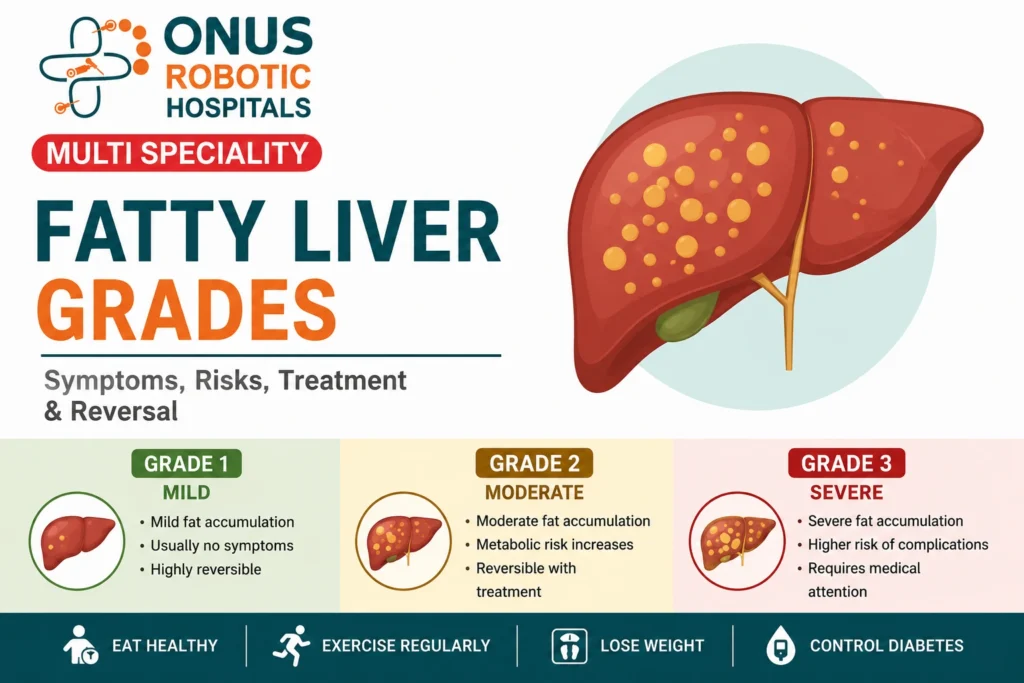
Understanding Fatty Liver Grades
Fatty liver grades are usually determined through an ultrasound scan and indicate the amount of fat present in the liver.
Grade 1 Fatty Liver
Mild Fat Accumulation
Characteristics:
- Earliest stage
- Mild fat deposits in liver cells
- Usually no symptoms
- Highly reversible
Possible Symptoms:
- Mild fatigue
- Low energy
- Slight abdominal discomfort
Grade 1 fatty liver responds very well to lifestyle changes such as diet modification, exercise, and weight loss.
Grade 2 Fatty Liver
Moderate Fat Accumulation
Characteristics:
- Increased liver fat content
- Higher risk of progression
- Greater metabolic dysfunction
Possible Symptoms:
- Fatigue
- Bloating
- Abdominal heaviness
- Reduced stamina
Risk Factors:
- Diabetes
- Obesity
- High cholesterol
- Insulin resistance
- PCOS
Grade 2 fatty liver requires active intervention but can still be successfully reversed in many patients.
Grade 3 Fatty Liver
Severe Fat Accumulation
Characteristics:
- Extensive fat infiltration
- Increased inflammation risk
- Higher risk of fibrosis
Possible Symptoms:
- Persistent fatigue
- Abdominal discomfort
- Reduced physical performance
- Metabolic complications
Grade 3 fatty liver requires prompt medical attention because it can progress to more serious liver conditions if ignored.
Potential Complications of Advanced Fatty Liver
If left untreated, severe fatty liver may lead to:
Non-Alcoholic Steatohepatitis (NASH)
A more aggressive form of fatty liver involving inflammation and liver cell damage.
Liver Fibrosis
Scar tissue develops within the liver, reducing normal function.
Liver Cirrhosis
Advanced scarring that can permanently damage the liver.
Liver Cancer
Long-standing fatty liver and cirrhosis can increase the risk of liver cancer.
Can Fatty Liver Be Reversed?
Yes. Fatty liver is one of the most reversible liver conditions, especially during the early stages.
Effective Fatty Liver Reversal Strategies
1. Weight Loss
Losing 7–10% of body weight can significantly reduce liver fat and improve liver function.
2. Follow a Healthy Diet
Include:
- Lean protein
- Fish
- Eggs
- Paneer
- Vegetables
- Whole foods
Avoid:
- Sugary drinks
- Sweets
- Refined carbohydrates
- Processed foods
3. Exercise Regularly
Recommended activities:
- Walking
- Cycling
- Swimming
- Resistance training
4. Control Diabetes
Maintaining healthy blood sugar levels is crucial for preventing fatty liver progression.
5. Improve Sleep Quality
Aim for 7–8 hours of quality sleep daily.
6. Manage Triglycerides and Cholesterol
Controlling metabolic risk factors helps reduce liver fat accumulation.
Fatty Liver vs Liver Fibrosis
Many people assume that a higher fatty liver grade automatically means severe liver damage.
This is not always true.
A patient with Grade 2 fatty liver may already have fibrosis, while another patient with Grade 3 fatty liver may have minimal fibrosis. Therefore, additional testing such as a FibroScan is often recommended to assess liver stiffness and fibrosis risk.
When Should You See a Doctor?
Consult a liver specialist if:
- Ultrasound shows Grade 2 or Grade 3 fatty liver
- You have diabetes
- You are overweight or obese
- Liver enzymes are elevated
- Triglycerides are high
- You have a family history of liver disease
Early evaluation can prevent long-term complications and improve outcomes.
Final Takeaway
Fatty liver grades are more than just numbers on an ultrasound report.
- Grade 1 Fatty Liver: Mild and highly reversible.
- Grade 2 Fatty Liver: Moderate and requires active lifestyle changes.
- Grade 3 Fatty Liver: Severe and needs immediate medical attention.
The encouraging news is that fatty liver reversal is possible at every stage when proper treatment, diet, exercise, and metabolic control are implemented early. Understanding your fatty liver grade is the first step toward protecting your liver and preventing future complications.
Consultation
📍 Dr. Ravi Kiran
Diabetologist & Preventive Medicine Specialist
Onus Robotic Hospital, Hyderabad