Introduction
One of the first questions people ask after learning about diabetes remission is:
“How long will it take to reverse my diabetes?”
The internet is full of claims promising:
- Reverse diabetes in 7 days
- Cure diabetes in 30 days
- Stop all medications in 60 days
- Permanent diabetes reversal in 90 days
While these claims may sound attractive, the reality is far more complex.
Type 2 diabetes develops over years through a combination of insulin resistance, excess body fat, genetics, lifestyle factors, and declining pancreatic function. As a result, meaningful improvement takes time and consistency.
At ONUS Robotic Hospitals, Hyderabad, Dr. P. Ravi Kiran helps patients understand realistic expectations regarding diabetes remission, blood sugar improvement, and long-term metabolic health.
Can Type 2 Diabetes Improve Quickly?
Yes.
In some people, blood sugar levels may begin improving within days or weeks after making significant changes to:
- Nutrition
- Physical activity
- Weight management
- Medication adherence
- Sleep quality
- Overall lifestyle
However, seeing better glucose readings does not automatically mean diabetes has been reversed.
The body’s metabolism requires time to stabilize and demonstrate sustained improvement.
Blood Sugar Improves Before HbA1c
Many patients notice:
- Lower fasting glucose
- Better post-meal glucose readings
- Reduced glucose fluctuations
within a few weeks.
However, doctors do not rely on a few good readings to diagnose remission.
Instead, they evaluate a longer-term marker called:
HbA1c
HbA1c reflects average blood sugar levels over approximately the previous three months.
This makes it one of the most important tools for assessing long-term diabetes control.
Why Does HbA1c Take Time to Change?
HbA1c measures the amount of glucose attached to hemoglobin inside red blood cells.
Since red blood cells remain in circulation for several months, HbA1c changes gradually.
Think of it this way:
Daily Glucose Reading
A snapshot of today.
HbA1c
A summary of the last few months.
This is why doctors typically reassess HbA1c every three months rather than every few days.
What Is the Official Definition of Diabetes Remission?
According to international expert consensus:
Type 2 Diabetes Remission
Means:
- HbA1c below 6.5%
- Maintained for at least three months
- Without usual glucose-lowering medications
Therefore, remission cannot be declared after a few normal readings or a short-term diet.
Sustained improvement is essential.
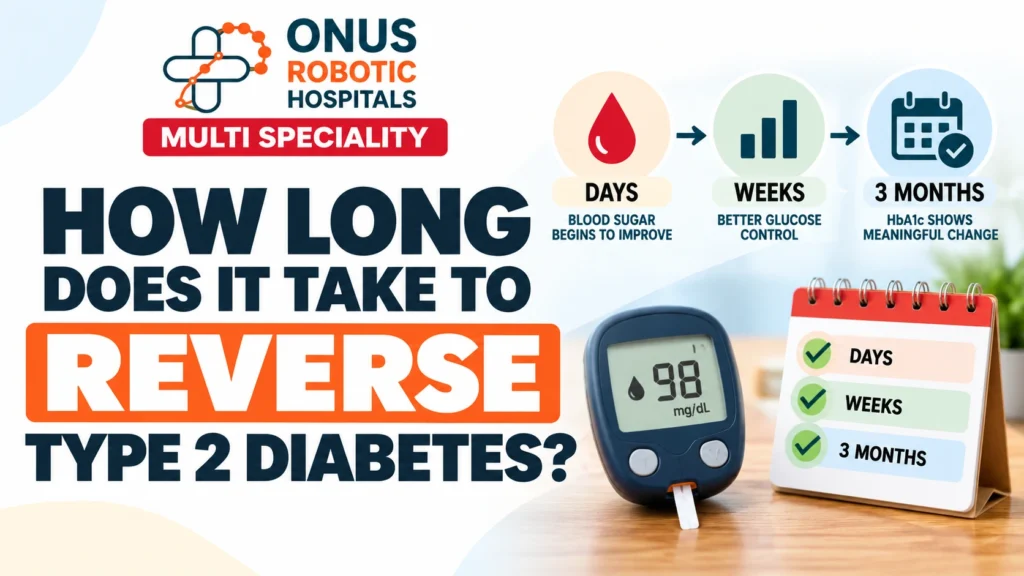
A Realistic Diabetes Improvement Timeline
Every person’s journey is different, but a general timeline may look like this:
First Few Days
Some people notice:
- Lower post-meal glucose spikes
- Better hydration
- Reduced calorie intake
- Increased daily movement
Those taking insulin or glucose-lowering medications should monitor for low blood sugar and consult their doctor regarding medication adjustments.
Weeks 2–6
During this period many individuals may experience:
- Lower fasting blood sugar
- Initial weight loss
- Reduced waist circumference
- Better energy levels
- Improved insulin sensitivity
These improvements often motivate people to continue healthy habits.
Around 3 Months
This is a major milestone.
Doctors typically repeat:
- HbA1c
- Weight assessment
- Blood pressure
- Lipid profile
to evaluate overall metabolic progress.
Many patients see significant HbA1c reductions during this period.
Six Months and Beyond
The focus gradually shifts from:
Weight Loss
to
Weight Maintenance
and
Long-Term Metabolic Health
This stage is often more challenging because maintaining improvements requires consistent habits.
Why Do Some People Improve Faster Than Others?
Several factors influence how quickly diabetes improves.
1. Starting HbA1c
Higher HbA1c levels often allow larger reductions initially.
2. Diabetes Duration
Recently diagnosed diabetes may respond more quickly than long-standing diabetes.
3. Insulin Resistance
People with significant insulin resistance often experience substantial improvement when lifestyle changes are implemented.
4. Body Fat Distribution
Reducing visceral fat can significantly improve metabolic function.
5. Liver Fat
Fatty liver commonly contributes to insulin resistance.
Improvement in liver health often improves glucose control.
6. Physical Activity
Regular exercise improves insulin sensitivity and glucose utilization.
7. Sleep and Stress
Poor sleep and chronic stress can negatively affect metabolic health.
How Long Does It Take to Improve Insulin Resistance?
There is no universal timeline.
Some improvement may occur within days or weeks when people:
- Reduce calorie intake
- Increase physical activity
- Lose excess weight
- Improve sleep quality
However, long-term improvement depends on maintaining these changes consistently.
Insulin resistance usually develops over years, so lasting improvement requires sustained effort.
Does Faster Weight Loss Mean Faster Diabetes Reversal?
Not necessarily.
Extremely rapid weight loss may cause:
- Muscle loss
- Fatigue
- Nutritional deficiencies
- Reduced physical performance
- Weight regain
The goal should be:
Sustainable Fat Loss
rather than simply losing weight as quickly as possible.
Why Preserving Muscle Matters
Many people focus only on the number on the weighing scale.
However, the quality of weight loss matters.
Losing:
Fat
is beneficial.
Losing:
Muscle
can reduce metabolic health and physical function.
This is why diabetes management should include:
- Adequate protein intake
- Strength training
- Physical activity
- Appropriate calorie intake
What If HbA1c Improves but Medication Is Still Needed?
This is still a major success.
Many patients experience:
- Lower HbA1c
- Reduced insulin resistance
- Better energy
- Weight loss
- Reduced cardiovascular risk
even if medication remains necessary.
The primary goal is improved health—not proving that medication is unnecessary.
Why Medication Adjustment Is Important
As blood sugar improves, medication requirements may change.
Continuing the same dose despite significant lifestyle changes can sometimes increase the risk of hypoglycemia.
Symptoms of low blood sugar may include:
- Sweating
- Trembling
- Dizziness
- Hunger
- Palpitations
- Weakness
- Confusion
Medication adjustments should always be supervised by a healthcare professional.
What Happens After Remission?
Achieving remission is only the beginning.
The next phase is:
Maintenance
Long-term success requires:
- Healthy eating
- Regular exercise
- Weight monitoring
- HbA1c testing
- Blood pressure control
- Cholesterol management
- Kidney health monitoring
- Eye examinations
Remission should be viewed as an ongoing process rather than a permanent cure.
Can Diabetes Return?
Yes.
Type 2 diabetes can recur if:
- Weight is regained
- Insulin resistance increases
- Physical activity declines
- Lifestyle habits deteriorate
However, recurrence does not mean previous efforts were wasted.
Many people can regain control through early intervention.
Frequently Asked Questions
Can diabetes improve within one month?
Yes. Blood sugar readings often improve within weeks, but formal remission requires longer-term evaluation.
Can diabetes be reversed in 90 days?
Some people achieve major improvements within three months, but remission depends on meeting established medical criteria.
How quickly can HbA1c fall?
HbA1c generally reflects the previous two to three months of glucose control, so meaningful changes are usually evaluated every three months.
How long does insulin resistance take to improve?
Improvement can begin within weeks, but long-term changes require consistent lifestyle modifications.
Is diabetes remission permanent?
Not necessarily. Continued monitoring and healthy habits remain important.
The ONUS Robotic Hospital Approach
At ONUS Robotic Hospitals, Hyderabad, Dr. P. Ravi Kiran focuses on comprehensive metabolic improvement rather than short-term blood sugar reductions.
Evaluation may include:
- HbA1c
- Weight and BMI
- Waist circumference
- Body composition
- Lipid profile
- Liver health
- Kidney function
- Blood pressure
- Physical activity assessment
- Nutrition assessment
Treatment plans are individualized and may focus on:
- Weight management
- Insulin resistance reduction
- Nutrition optimization
- Strength training
- Diabetes prevention
- Fatty liver management
- Medication optimization
Conclusion
Type 2 diabetes does not develop overnight, and meaningful improvement takes time.
While blood sugar may improve within days or weeks, true diabetes remission requires sustained metabolic improvement and ongoing monitoring.