Introduction
One of the most frequently asked questions by people trying to lose weight is:
“Doctor, how many calories should I eat every day to lose weight?”
While it sounds like a simple question, the answer is highly individual. There is no single calorie number that works for everyone.
Some people may lose weight eating 1,400 calories per day, while others may require 1,800 or even 2,200 calories depending on their body size, activity levels, muscle mass, age, medical conditions, and weight-loss goals.
Successful weight loss is not about starving yourself. The goal should be:
✔ Lose excess body fat
✔ Preserve muscle mass
✔ Improve metabolic health
✔ Maintain long-term results
At ONUS Robotic Hospitals, Dr. P. Ravi Kiran focuses on sustainable medical weight management rather than short-term crash diets.
What Are Calories?
Calories are units of energy.
Your body uses calories every day for:
- Breathing
- Heart function
- Brain activity
- Digestion
- Maintaining body temperature
- Walking and exercise
- Daily activities
Even while sleeping, your body burns calories to keep essential organs functioning.
This basic energy requirement is called the Basal Metabolic Rate (BMR).
Understanding Total Daily Energy Expenditure (TDEE)
The total calories your body needs each day is known as your Total Daily Energy Expenditure (TDEE).
It consists of:
1. Basal Metabolic Rate (BMR)
Energy required for basic body functions.
2. Physical Activity
Calories burned during:
- Walking
- Exercise
- Sports
- Household work
- Occupational activities
3. Thermic Effect of Food
Energy used to digest, absorb, and process food.
Together, these determine how many calories your body needs daily.
What Is a Calorie Deficit?
Weight loss occurs when your body consistently uses more energy than it receives from food.
Calories Consumed < Calories Burned = Calorie Deficit
When this happens, your body begins using stored energy, including body fat.
However, weight loss is more complex than simple math because hormones, appetite, sleep, medications, and metabolic adaptations also play important roles.
How Many Calories Should You Eat to Lose Weight?
There is no universal calorie target.
Different individuals may require:
- 1,200 calories
- 1,500 calories
- 1,800 calories
- 2,000 calories
- 2,500 calories
or even more.
Factors affecting calorie needs include:
- Age
- Gender
- Height
- Weight
- Muscle mass
- Activity level
- Medical conditions
- Current medications
- Weight-loss goals
A sedentary office worker and a physically active laborer will have very different calorie requirements.
Why Extremely Low-Calorie Diets Often Fail
Many people believe:
“If I eat fewer calories, I’ll lose weight faster.”
Unfortunately, it doesn’t always work that way.
Very restrictive diets can cause:
- Constant hunger
- Fatigue
- Poor concentration
- Nutritional deficiencies
- Muscle loss
- Reduced exercise performance
- Increased cravings
- Weight regain
Sustainable weight loss is usually achieved through a moderate calorie deficit rather than severe restriction.
What Is a Reasonable Calorie Deficit?
For many adults, a moderate calorie reduction is often easier to maintain long term.
A commonly used approach is approximately:
500–750 calories below estimated daily energy requirements.
However, this is not a universal prescription.
The ideal deficit depends on:
- Starting weight
- Degree of obesity
- Activity level
- Age
- Medical conditions
- Nutritional status
Medical supervision is important for individuals considering aggressive calorie restriction.
Why Does Weight Loss Slow Down?
Many people lose weight quickly initially and then hit a plateau.
For example:
- Starting weight: 100 kg
- After several months: 85 kg
A smaller body requires fewer calories than a larger body.
As weight decreases:
- Energy needs decrease
- Calorie deficits become smaller
- Weight loss slows naturally
This process is called metabolic adaptation and is a normal part of weight management.
Calories Matter, But Food Quality Matters Too
Two meals can contain the same number of calories but have very different effects on health.
For example:
Meal A
500 calories from:
- Vegetables
- Protein
- Whole foods
Meal B
500 calories from:
- Sweets
- Sugary beverages
- Processed snacks
Both provide 500 calories, but they affect:
- Hunger
- Fullness
- Blood sugar
- Nutrition
- Energy levels
very differently.
The Importance of Protein During Weight Loss
Protein plays a crucial role in fat loss.
Benefits include:
- Increased fullness
- Reduced hunger
- Better muscle preservation
- Improved recovery
- Better metabolic health
Good protein sources include:
- Eggs
- Fish
- Chicken
- Paneer
- Tofu
- Greek yogurt
- Dal
- Beans
Combining:
Calorie Deficit + Adequate Protein + Strength Training
helps maximize fat loss while preserving muscle.
Why Fibre Helps Weight Loss
High-fibre foods increase fullness and improve digestive health.
Examples include:
- Vegetables
- Fruits
- Whole grains
- Dal
- Beans
- Seeds
- Millets
Fibre-rich foods often help people naturally consume fewer calories.
Can Indians Lose Weight Without Giving Up Rice?
Absolutely.
Rice is not automatically responsible for weight gain.
The real issue is often:
- Excessive portions
- High oil intake
- Sugary beverages
- Fried foods
- Low protein intake
- Physical inactivity
Rice can be included as part of a balanced calorie-controlled diet.
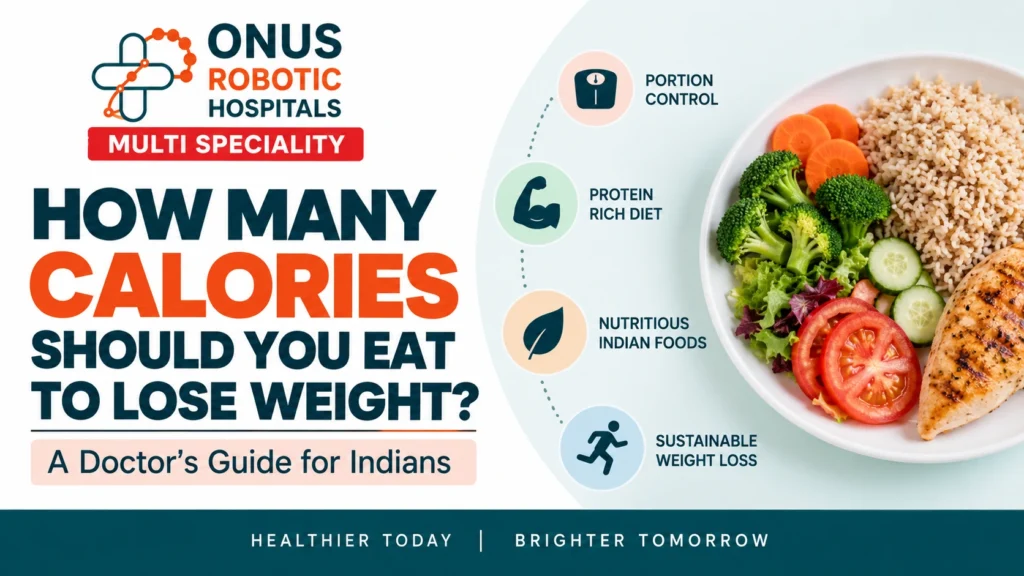
A Simple Indian Weight-Loss Plate
A practical meal structure:
½ Plate
Vegetables and salad
¼ Plate
Protein
Examples:
- Dal
- Paneer
- Eggs
- Fish
- Chicken
- Tofu
- Beans
¼ Plate
Carbohydrates
Examples:
- Rice
- Roti
- Millets
- Whole grains
Add healthy fats in appropriate portions.
Hidden Calories: Cooking Oil
Many people underestimate calories from cooking oil.
Just one tablespoon of oil contains approximately:
120 calories
Multiple tablespoons used throughout the day can significantly increase calorie intake.
Monitoring oil usage is often one of the simplest ways to reduce calories.
Beware of Liquid Calories
Beverages can quietly contribute large amounts of calories.
Examples include:
- Soft drinks
- Sweetened tea
- Sweetened coffee
- Fruit juices
- Milkshakes
- Energy drinks
These calories often provide little satiety and can easily lead to overconsumption.
Can You Lose Weight Without Counting Calories?
Yes.
Many people successfully lose weight without tracking every calorie.
Helpful habits include:
- Increasing vegetables
- Prioritizing protein
- Reducing sugary drinks
- Controlling portions
- Limiting processed snacks
- Eating slowly
- Walking regularly
These behaviors naturally support calorie reduction.
Does Intermittent Fasting Help?
Intermittent fasting can be useful for some individuals.
However, fasting is not magic.
Weight loss still depends largely on:
- Total calorie intake
- Food quality
- Consistency
If fasting helps reduce calorie intake sustainably, it may be beneficial.
Why Exercise Still Matters
Exercise provides benefits beyond calorie burning.
It helps improve:
- Cardiovascular health
- Blood sugar control
- Insulin sensitivity
- Muscle preservation
- Mental well-being
- Long-term weight maintenance
The most effective strategy combines:
Nutrition + Walking + Strength Training
rather than relying on exercise alone.
Don’t Ignore NEAT
NEAT stands for:
Non-Exercise Activity Thermogenesis
It includes calories burned through:
- Walking
- Standing
- Household chores
- Gardening
- Moving around at work
Increasing daily movement can significantly impact overall calorie expenditure.
How Much Weight Can You Expect to Lose?
Weight-loss speed varies between individuals.
A commonly used general target is:
0.5–1 kg per week
However, progress depends on:
- Starting weight
- Calorie deficit
- Activity level
- Medical conditions
- Medication use
Sustainable fat loss is more important than rapid weight loss.
When Should You Seek Medical Guidance?
Consult a healthcare professional if you have:
- Obesity
- Prediabetes
- Type 2 diabetes
- Fatty liver disease
- Thyroid disorders
- Difficulty losing weight
- Repeated weight regain
- Metabolic syndrome
A personalized assessment can help determine the most appropriate nutrition and weight-management strategy.
Conclusion
There is no magic calorie number that guarantees weight loss.
The ideal calorie target depends on your:
- Body size
- Activity level
- Metabolism
- Medical history
- Weight-loss goals
Successful weight management is not about eating as little as possible. It is about creating a sustainable calorie deficit while ensuring adequate protein, fibre, nutrients, and physical activity.
The most effective long-term approach combines:
✔ Appropriate calorie intake
✔ High-quality nutrition
✔ Strength training
✔ Regular movement
✔ Good sleep
✔ Consistency
Rather than following extreme diets, focus on building habits that improve both weight and metabolic health.
Dr. P. Ravi Kiran
ONUS Robotic Multispeciality Hospitals