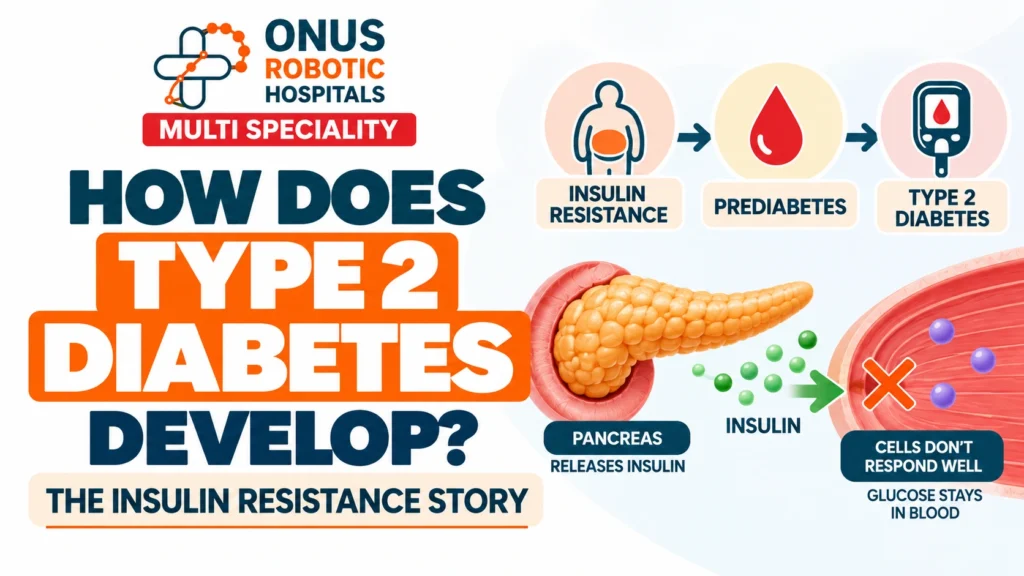
Type 2 diabetes is one of the fastest-growing health concerns worldwide, affecting millions of people across all age groups. Contrary to popular belief, diabetes does not develop suddenly. In most cases, it is the result of years of underlying metabolic changes occurring silently within the body.
One of the most important drivers of Type 2 diabetes is insulin resistance, a condition that often develops long before blood sugar levels rise into the diabetic range.
Understanding insulin resistance can help individuals take preventive steps early and reduce their risk of developing diabetes and its complications.
What Is Insulin?
Insulin is a hormone produced by specialized cells called beta cells in the pancreas.
Its primary role is to regulate blood glucose levels by helping glucose move from the bloodstream into the body’s cells, where it is used for energy.
After a meal:
Food → Digestion → Glucose enters bloodstream → Pancreas releases insulin → Cells absorb glucose
This process helps maintain healthy blood sugar levels.
When insulin functions properly, the body efficiently utilizes glucose for energy.
What Is Insulin Resistance?
Insulin resistance occurs when the body’s cells become less responsive to insulin.
Although insulin is still present, muscle, fat, and liver cells do not respond effectively to its signals.
As a result, the pancreas compensates by producing more insulin to keep blood sugar levels normal.
For many years, a person may have:
- Normal fasting glucose
- Normal HbA1c
- No symptoms
Yet insulin resistance may already be present.
This stage often goes unnoticed until blood sugar levels begin to rise.
The Three Stages of Diabetes Development
Stage 1: Insulin Resistance
At this stage:
- Cells become less responsive to insulin
- The pancreas increases insulin production
- Blood glucose remains relatively normal
This condition is sometimes called compensatory hyperinsulinemia, meaning higher-than-normal insulin levels in the bloodstream.
Many people remain in this stage for years without knowing it.
Stage 2: Prediabetes
Over time, the pancreas may struggle to keep up with the body’s increasing demand for insulin.
Blood sugar levels begin to rise above normal but have not yet reached diabetic levels.
This stage is called prediabetes.
Prediabetes serves as an early warning sign that the body’s glucose regulation system is under stress.
Without intervention, the risk of progressing to Type 2 diabetes increases significantly.
Stage 3: Type 2 Diabetes
Eventually, the pancreas can no longer produce enough insulin to overcome insulin resistance.
Blood glucose levels rise into the diabetic range, leading to a diagnosis of Type 2 diabetes.
At this point:
- Insulin resistance persists
- Insulin production becomes inadequate
- Blood sugar remains elevated
Many individuals are diagnosed only after symptoms develop or routine blood tests reveal abnormal results.
What Causes Insulin Resistance?
Insulin resistance develops due to a combination of genetic, lifestyle, and metabolic factors.
1. Excess Visceral Fat
Visceral fat surrounds internal organs and is strongly associated with insulin resistance.
This type of fat produces inflammatory substances that interfere with insulin signaling.
2. Physical Inactivity
Muscles play a major role in glucose utilization.
A sedentary lifestyle reduces insulin sensitivity and contributes to metabolic dysfunction.
3. Poor Dietary Habits
Excess calorie intake, highly processed foods, sugary beverages, and frequent overeating may contribute to weight gain and insulin resistance.
4. Genetic Factors
A family history of Type 2 diabetes can increase susceptibility to insulin resistance.
5. Aging
As people age, muscle mass often decreases while body fat increases, raising the risk of insulin resistance.
6. Sleep Disorders
Poor sleep quality, sleep deprivation, and obstructive sleep apnea can negatively affect insulin sensitivity.
7. Stress
Chronic stress may influence hormones involved in appetite, metabolism, and glucose regulation.
Why Belly Fat Matters
Not all body fat behaves the same way.
Visceral fat, commonly referred to as belly fat, is particularly harmful because it surrounds vital organs such as:
- Liver
- Pancreas
- Intestines
Excess visceral fat is linked to:
- Insulin resistance
- Fatty liver disease
- Prediabetes
- Type 2 diabetes
- High blood pressure
- Cardiovascular disease
This is why waist circumference is often considered an important marker of metabolic health.
Can Thin People Develop Insulin Resistance?
Yes.
Many people assume that only overweight individuals develop diabetes.
However, this is not always true.
Some individuals have:
- Normal body weight
- Normal BMI
- Hidden visceral fat
- Reduced muscle mass
- Genetic predisposition
This phenomenon is especially common among South Asians, including Indians.
As a result, metabolic problems can occur even when body weight appears normal.
Conditions Associated With Insulin Resistance
Insulin resistance often occurs alongside several other metabolic conditions, including:
Prediabetes
A warning stage before diabetes develops.
Obesity
Especially abdominal obesity.
Metabolic Syndrome
A cluster of conditions including:
- High blood pressure
- Elevated blood sugar
- Increased waist circumference
- High triglycerides
- Low HDL cholesterol
Fatty Liver Disease
Fat accumulation in the liver is strongly linked to insulin resistance.
Cardiovascular Disease
Insulin resistance increases the risk of heart disease and stroke.
Symptoms of Insulin Resistance
One of the challenges with insulin resistance is that it frequently causes no obvious symptoms.
Some individuals may notice:
- Increasing belly fat
- Difficulty losing weight
- Fatigue
- Increased hunger
- Darkened skin around the neck or armpits (Acanthosis Nigricans)
However, many people feel completely healthy despite significant metabolic dysfunction.
This is why regular screening is important.
How Is Insulin Resistance Diagnosed?
There is no single test that perfectly diagnoses insulin resistance.
Doctors typically evaluate multiple factors, including:
- Fasting blood sugar
- HbA1c
- Lipid profile
- Blood pressure
- Waist circumference
- Body Mass Index (BMI)
- Family history
- Lifestyle factors
- Liver health
In selected cases, fasting insulin levels and HOMA-IR calculations may provide additional information.
Can Insulin Resistance Be Reversed?
Insulin sensitivity can improve significantly in many individuals.
Key strategies include:
Weight Management
Reducing excess body fat, particularly visceral fat, can improve insulin function.
Regular Exercise
Both aerobic exercise and resistance training improve insulin sensitivity.
Strength Training
Building muscle increases glucose utilization and metabolic efficiency.
Healthy Nutrition
Focus on:
- Vegetables
- Fruits
- Whole grains
- Lean protein
- Healthy fats
- Portion control
Better Sleep
Aim for 7–9 hours of quality sleep each night.
Stress Management
Managing stress can support healthier metabolic function.
The Importance of Early Intervention
The progression from:
Insulin Resistance → Prediabetes → Type 2 Diabetes
is not inevitable.
Early lifestyle changes can significantly reduce the risk of developing diabetes.
The sooner insulin resistance is identified, the greater the opportunity to prevent long-term complications.
The Onus Robotic Hospital Approach
At Onus Robotic Hospital, Hyderabad, Dr. P. Ravi Kiran focuses on identifying metabolic risk factors before diabetes develops.
Comprehensive assessments may include:
- Weight and BMI
- Waist circumference
- Blood glucose
- HbA1c
- Lipid profile
- Body composition
- Blood pressure
- Liver health
- Lifestyle evaluation
Treatment plans are individualized and may include:
- Nutrition counseling
- Weight management
- Physical activity guidance
- Strength training recommendations
- Diabetes prevention strategies
- Ongoing metabolic monitoring
Frequently Asked Questions
Can insulin resistance occur with normal blood sugar?
Yes. Insulin resistance can exist for years before glucose levels become abnormal.
Does insulin resistance always lead to diabetes?
No. Many people improve insulin sensitivity through lifestyle changes and never develop diabetes.
Is belly fat a sign of insulin resistance?
Excess abdominal fat is strongly associated with insulin resistance and metabolic disease.
Can exercise improve insulin resistance?
Yes. Regular physical activity is one of the most effective ways to improve insulin sensitivity.
Is insulin resistance reversible?
Many people can significantly improve insulin sensitivity through weight management, exercise, better nutrition, and healthy lifestyle habits.
Conclusion
Type 2 diabetes usually develops gradually through a process that begins with insulin resistance. Long before blood sugar levels become abnormal, the body may already be struggling to maintain metabolic balance.
Understanding insulin resistance provides an opportunity to act early.
By focusing on:
- Reducing belly fat
- Increasing physical activity
- Building muscle
- Eating a balanced diet
- Improving sleep
- Managing stress
many individuals can improve insulin sensitivity and reduce their risk of developing Type 2 diabetes.
Early prevention remains one of the most powerful tools in protecting long-term metabolic health.