Introduction
Insulin resistance and type 2 diabetes are closely related metabolic conditions, but they are not the same. Understanding the difference is important for recognizing early warning signs, preventing diabetes, and improving long-term metabolic health.
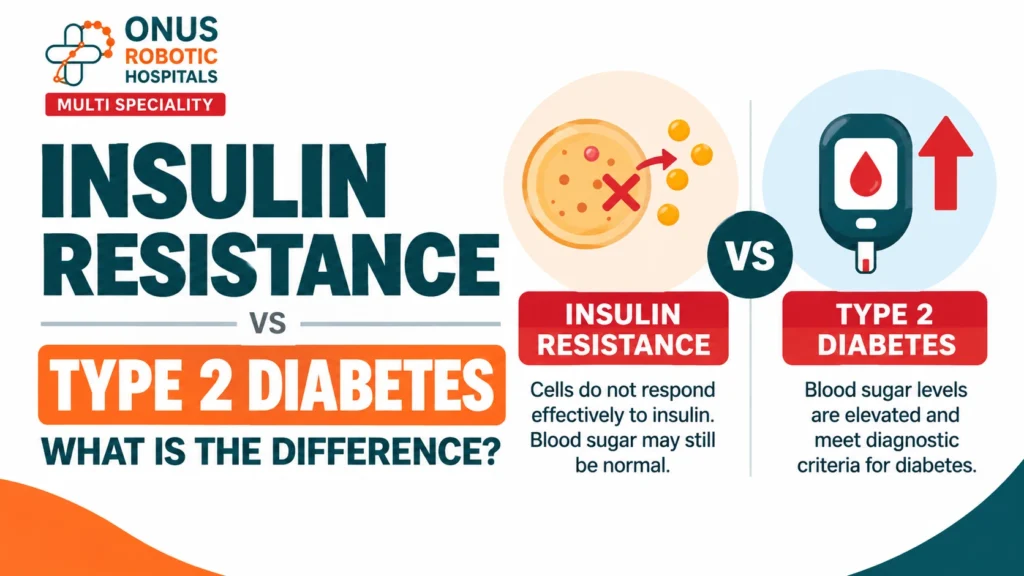
Many people assume that if their blood sugar levels are normal, they cannot have insulin resistance. However, insulin resistance can develop while blood glucose remains within the normal range because the pancreas may initially compensate by producing more insulin.
Over time, this compensation may become insufficient, causing blood sugar levels to rise. This can lead to prediabetes and, in some people, type 2 diabetes.
The good news is that early intervention through healthy eating, regular physical activity, weight management, and appropriate medical care can improve insulin sensitivity and reduce the risk of developing type 2 diabetes.
What Is Insulin Resistance?
Insulin resistance occurs when the body’s cells become less responsive to insulin, a hormone produced by the pancreas.
Insulin helps glucose move from the bloodstream into cells, where it is used for energy. It also helps regulate how the liver produces glucose and how the body stores and uses nutrients.
When insulin resistance develops, muscle, fat, and liver cells do not respond as effectively to insulin as they should.
To compensate, the pancreas may produce more insulin to keep blood sugar levels within the normal range.
Common Features of Insulin Resistance
- Reduced sensitivity to insulin
- Higher insulin production in some individuals
- Possible increase in abdominal fat
- Increased risk of prediabetes
- Association with high triglycerides and fatty liver disease
- Increased risk of developing type 2 diabetes
Insulin resistance does not automatically mean a person has diabetes. Some individuals maintain normal blood glucose levels for years.
What Is Prediabetes?
Prediabetes is a condition in which blood glucose levels are higher than normal but have not reached the diagnostic threshold for diabetes.
It indicates an increased risk of developing type 2 diabetes and other metabolic complications.
Prediabetes often involves insulin resistance, although impaired insulin secretion and other metabolic factors may also contribute.
Common Laboratory Criteria for Prediabetes
The following are commonly used diagnostic ranges in the United States. Local clinical guidelines may differ.
- Fasting plasma glucose: 100–125 mg/dL
- HbA1c: 5.7%–6.4%
- Two-hour oral glucose tolerance test: 140–199 mg/dL
Prediabetes usually does not cause obvious symptoms. It is often identified during routine blood testing.
Early identification is valuable because lifestyle interventions can significantly reduce the risk of progression to type 2 diabetes.
What Is Type 2 Diabetes?
Type 2 diabetes is a chronic metabolic condition characterized by persistently elevated blood glucose.
It develops when the body cannot maintain normal glucose regulation because insulin action is insufficient, insulin production cannot meet the body’s needs, or both.
Insulin resistance is a major contributor to type 2 diabetes, but the condition also involves changes in pancreatic beta-cell function, which reduces the body’s ability to produce enough insulin over time.
Common Signs and Symptoms
Some people have no noticeable symptoms in the early stages. When symptoms occur, they may include:
- Increased thirst
- Frequent urination
- Increased hunger
- Unexplained weight loss
- Fatigue
- Blurred vision
- Slow wound healing
- Recurrent infections
These symptoms can have other causes. Blood testing is necessary to establish a diagnosis.
Common Laboratory Criteria for Diabetes
Commonly used diagnostic thresholds include:
- Fasting plasma glucose: 126 mg/dL or higher
- HbA1c: 6.5% or higher
- Two-hour oral glucose tolerance test: 200 mg/dL or higher
- Random plasma glucose: 200 mg/dL or higher in the presence of classic symptoms of hyperglycemia or a hyperglycemic crisis
Unless hyperglycemia is unequivocal, an abnormal result generally requires confirmation with repeat testing or another diagnostic test.
Insulin Resistance vs Prediabetes vs Type 2 Diabetes
Understanding how these conditions differ can help clarify the progression of metabolic dysfunction.
| Feature | Insulin Resistance | Prediabetes | Type 2 Diabetes |
|---|---|---|---|
| Main problem | Reduced response to insulin | Blood glucose above normal | Blood glucose in the diabetic range |
| Blood sugar | May be normal | Moderately elevated | Persistently elevated |
| Insulin levels | May be elevated | Variable | Variable; may be high or insufficient |
| Symptoms | Often absent | Usually absent | May be absent or present |
| Diagnosis | Clinical assessment; no single universal routine test | Blood glucose or HbA1c criteria | Blood glucose or HbA1c criteria |
| Main goal | Improve insulin sensitivity and reduce risk | Prevent or delay diabetes | Control glucose and reduce complications |
Important: These conditions are related, but they are not always sequential. Not everyone with insulin resistance develops prediabetes, and not everyone with prediabetes progresses to type 2 diabetes.
Is Insulin Resistance Always Present in Type 2 Diabetes?
Insulin resistance is common in people with type 2 diabetes, but it is not the only factor responsible for the condition.
Type 2 diabetes varies between individuals. Some people have substantial insulin resistance, while others have a greater reduction in the pancreas’s ability to produce sufficient insulin.
Several factors may contribute, including:
- Genetic predisposition
- Excess body fat, particularly abdominal fat
- Physical inactivity
- Liver and muscle insulin resistance
- Reduced pancreatic beta-cell function
- Age and hormonal factors
- Certain medications and medical conditions
This explains why diabetes management needs to be individualized rather than based on a single treatment approach.
Can You Have Insulin Resistance With Normal Blood Sugar?
Yes. Insulin resistance can exist before blood glucose becomes abnormal.
In the early stages, the pancreas may compensate by producing additional insulin. This helps maintain normal glucose levels despite reduced insulin sensitivity.
A person may therefore have normal fasting glucose and HbA1c while still having metabolic risk factors.
However, normal blood sugar alone cannot establish whether insulin resistance is present, and fasting insulin or HOMA-IR should not be treated as definitive diagnostic tests.
Healthcare professionals consider the overall clinical picture, including weight, waist circumference, blood pressure, lipid levels, family history, and glucose testing.
Can You Improve Insulin Resistance Before Diabetes Develops?
Yes. Insulin sensitivity can improve substantially in many people through lifestyle changes.
The prediabetes stage is particularly important because intervention can reduce the likelihood of progressing to type 2 diabetes.
1. Maintain a Healthy Weight
If you have overweight or obesity, gradual weight loss may improve insulin sensitivity.
The appropriate weight-loss goal depends on your individual health status. Even modest weight reduction can produce meaningful metabolic benefits for some people.
2. Exercise Regularly
Physical activity helps muscles use glucose more effectively.
Consider incorporating:
- Brisk walking
- Cycling
- Swimming
- Resistance training
- Regular movement breaks during prolonged sitting
For many adults, a reasonable target is at least 150 minutes of moderate-intensity physical activity per week, adjusted for fitness and medical needs.
3. Choose a Balanced Diet
Focus on a sustainable eating pattern that includes:
- Vegetables and other fiber-rich foods
- Whole grains
- Beans and legumes
- Nuts and seeds
- Suitable protein sources
- Healthy fats
Limit sugary drinks, frequent consumption of highly refined carbohydrates, and heavily processed foods.
You do not necessarily need to eliminate all carbohydrates. Food quality, portion sizes, total energy intake, and individual medical needs all matter.
4. Improve Sleep Quality
Poor sleep and insufficient sleep can affect appetite regulation and insulin sensitivity.
Maintain a consistent sleep schedule and seek medical advice if you experience persistent sleep difficulties or symptoms of sleep apnea.
5. Manage Other Metabolic Risk Factors
Blood pressure, cholesterol, fatty liver disease, and smoking also affect long-term health.
Addressing these risk factors can help reduce cardiovascular risk even when glucose levels are normal.
Can Type 2 Diabetes Be Reversed?
Some people with type 2 diabetes can achieve what healthcare professionals call diabetes remission.
Remission generally means that HbA1c remains below 6.5% for at least three months without glucose-lowering medication.
It may be achieved through substantial, sustained weight loss and lifestyle changes in some individuals, particularly when intervention occurs relatively early.
However, remission is not the same as a permanent cure. Blood glucose can rise again, and continued monitoring remains important.
Never stop prescribed diabetes medication without consulting your healthcare professional.
Can Insulin Resistance Return After Improvement?
Yes. Insulin sensitivity can decline again if contributing factors change.
For example:
- Weight regain may worsen insulin sensitivity.
- Physical inactivity may reduce glucose utilization by muscles.
- Poor sleep can affect metabolic regulation.
- Other health conditions may influence glucose control.
Similarly, type 2 diabetes can recur after remission.
Long-term maintenance of healthy habits and appropriate medical follow-up are therefore essential.
Why Understanding the Difference Matters
Confusing insulin resistance with diabetes can lead to incorrect assumptions.
For example, someone might believe that normal glucose results automatically rule out insulin resistance. This is not necessarily true.
Another person might see improved glucose levels and assume their diabetes has been permanently cured. That conclusion may also be incorrect.
Insulin resistance describes how effectively the body responds to insulin. Prediabetes and type 2 diabetes are diagnosed using established blood glucose or HbA1c criteria.
Each requires appropriate assessment and follow-up.
Frequently Asked Questions
1. Which comes first: insulin resistance or type 2 diabetes?
Insulin resistance often develops before type 2 diabetes, particularly in people with excess abdominal fat. However, reduced insulin production also plays an important role, and the progression differs between individuals.
2. Is prediabetes the same as insulin resistance?
No. Prediabetes is defined by blood glucose or HbA1c levels above normal but below the diabetes threshold. Insulin resistance is a reduced response to insulin and may exist even when glucose levels are normal.
3. Can insulin resistance go away?
Insulin sensitivity can improve significantly through weight management, physical activity, and other lifestyle changes. The extent of improvement varies, and insulin resistance may return if contributing factors reappear.
4. Does everyone with insulin resistance develop diabetes?
No. Many people with insulin resistance never develop type 2 diabetes. Risk depends on several factors, including genetics, pancreatic function, body composition, lifestyle, and other health conditions.
5. Can type 2 diabetes go into remission?
Yes. Some people achieve remission, usually defined as HbA1c below 6.5% for at least three months without glucose-lowering medication. Continued monitoring is necessary because remission may not be permanent.
6. Which blood test is best for diagnosing insulin resistance?
There is no single universally accepted routine blood test that definitively diagnoses insulin resistance in every individual. Fasting glucose and HbA1c assess glucose status, while fasting insulin and HOMA-IR have limitations and require careful interpretation.
Conclusion
Insulin resistance, prediabetes, and type 2 diabetes are closely connected, but they describe different aspects of metabolic health.
Insulin resistance means the body’s cells respond less effectively to insulin. Prediabetes means blood glucose has risen above normal but remains below the diabetes threshold. Type 2 diabetes occurs when glucose regulation deteriorates enough to meet diagnostic criteria.
Recognizing metabolic risk early creates an opportunity to improve insulin sensitivity, prevent or delay diabetes, and protect long-term health.
The key message is simple: Do not wait for diabetes to develop before taking care of your metabolic health. A balanced diet, regular exercise, sustainable weight management, and appropriate medical screening can make a meaningful difference.
Medical disclaimer: This article is for educational purposes only and does not replace professional medical advice, diagnosis, or treatment. Consult a qualified healthcare professional for individualized testing and care.