Understanding the Science Behind Weight Gain and Long-Term Weight Management
By Dr. P. Ravi Kiran | General Physician, Diabetologist & Infectious Diseases Specialist | ONUS Robotic Hospitals
Introduction
For many years, obesity has been misunderstood as simply a result of overeating or lack of exercise. People living with obesity are often told to “eat less and move more,” as if weight gain were purely a matter of personal choice or willpower.
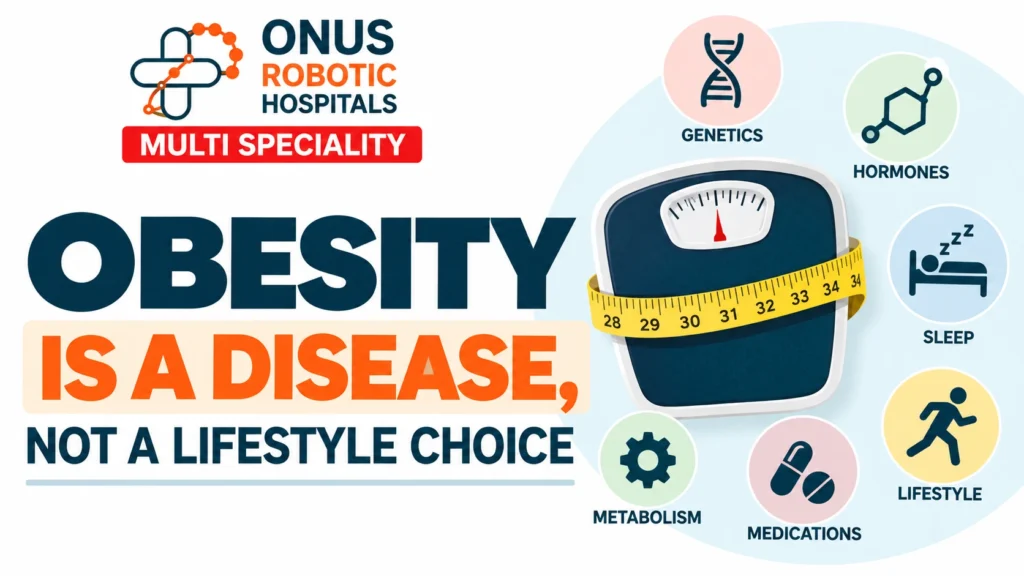
However, modern medical science has clearly established that obesity is a complex chronic disease influenced by multiple biological, environmental, behavioral, and medical factors.
Just as diabetes, hypertension, and asthma require proper medical evaluation and treatment, obesity also deserves a scientific and compassionate approach rather than blame or stigma.
At ONUS Robotic Hospitals, Dr. P. Ravi Kiran focuses on identifying the underlying causes of weight gain and developing personalized treatment plans that support long-term metabolic health and sustainable weight management.
What Is Obesity?
Obesity is a medical condition characterized by excessive accumulation of body fat that may negatively affect overall health.
It is associated with an increased risk of several serious health conditions, including:
- Type 2 Diabetes
- High Blood Pressure
- Heart Disease
- Stroke
- Fatty Liver Disease
- Sleep Apnea
- Osteoarthritis
- Certain Types of Cancer
- Metabolic Syndrome
Obesity is not simply about body weight or appearance. It is a condition that affects multiple organs and body systems.
Why Obesity Is Not Just About Eating Too Much
Many people assume that obesity develops only because someone consumes excess calories.
While calorie balance is important, weight regulation is controlled by complex biological systems involving:
- Hormones
- Brain signaling
- Appetite regulation
- Genetics
- Metabolism
- Sleep quality
- Stress levels
- Medications
- Physical activity
- Medical conditions
This means that two people following similar lifestyles may have very different responses when it comes to weight gain or weight loss.
The Role of Genetics
Research shows that genetics plays an important role in determining:
- Appetite
- Fat storage
- Metabolic rate
- Hunger signals
- Satiety responses
Some individuals are genetically more susceptible to gaining weight than others.
Genetics does not make obesity inevitable, but it can increase vulnerability when combined with environmental and lifestyle factors.
How Hormones Influence Body Weight
The human body has sophisticated hormonal systems that regulate hunger and energy balance.
Key hormones involved include:
Leptin
Leptin helps signal fullness and energy storage.
Ghrelin
Often called the “hunger hormone,” ghrelin stimulates appetite.
Insulin
Insulin helps regulate blood sugar and energy storage.
Cortisol
Chronic stress and elevated cortisol levels may influence appetite and fat distribution.
When these hormonal systems become disrupted, weight management can become significantly more challenging.
Insulin Resistance and Obesity
One of the most common metabolic abnormalities associated with obesity is insulin resistance.
In insulin resistance:
- The body’s cells become less responsive to insulin.
- Blood sugar regulation becomes more difficult.
- Fat storage may increase.
- Hunger and cravings may worsen.
Insulin resistance is strongly linked to:
- Belly fat
- Prediabetes
- Type 2 Diabetes
- Fatty Liver Disease
Addressing insulin resistance is often an important component of obesity treatment.
Why Belly Fat Matters
Not all body fat behaves the same way.
Subcutaneous Fat
This is the fat stored beneath the skin.
Visceral Fat
This fat surrounds internal organs and is considered more metabolically active.
Excess visceral fat is associated with:
- Chronic inflammation
- Insulin resistance
- High blood pressure
- Diabetes
- Cardiovascular disease
Reducing visceral fat is often more important than simply reducing overall body weight.
Sleep and Weight Gain
Sleep is frequently overlooked in discussions about obesity.
Poor sleep can affect:
- Hunger hormones
- Food cravings
- Energy levels
- Physical activity
- Blood sugar regulation
People who regularly sleep too little may find it harder to maintain a healthy weight.
Most adults benefit from approximately 7–9 hours of quality sleep per night.
Stress and Emotional Eating
Chronic stress can influence eating behaviors and metabolic health.
Stress may contribute to:
- Increased appetite
- Emotional eating
- Sugar cravings
- Poor sleep
- Reduced physical activity
Managing stress is often an important part of a successful weight-management strategy.
Medical Conditions That Can Contribute to Weight Gain
Several health conditions can make weight management more difficult.
Examples include:
- Hypothyroidism
- Polycystic Ovary Syndrome (PCOS)
- Cushing’s Syndrome
- Insulin Resistance
- Depression
- Sleep Apnea
Proper medical evaluation is important to identify any underlying conditions contributing to weight gain.
Can Medications Cause Weight Gain?
Yes.
Certain medications may influence body weight.
Examples include some:
- Steroids
- Antidepressants
- Antipsychotic medications
- Diabetes medications
- Hormonal treatments
Patients should never stop prescribed medications without consulting their doctor, but discussing weight-related concerns with a healthcare professional is important.
Why Dieting Alone Often Fails
Many people experience a frustrating cycle:
Lose weight → Regain weight → Repeat
This occurs because the body has biological mechanisms designed to protect stored energy.
After significant weight loss:
- Hunger may increase
- Metabolism may slow
- Appetite hormones may change
This is one reason why obesity should be viewed as a chronic disease requiring long-term management rather than a short-term diet challenge.
A Modern Approach to Obesity Treatment
Effective obesity management usually involves multiple components working together.
Nutrition
A personalized eating plan focused on sustainable habits.
Physical Activity
Regular movement and exercise appropriate for individual fitness levels.
Strength Training
Maintaining muscle mass during weight loss.
Sleep Optimization
Improving sleep quality and duration.
Behavioral Support
Addressing habits, triggers, and emotional factors.
Medical Evaluation
Identifying metabolic and hormonal contributors.
Medication When Appropriate
For selected patients, prescription weight-management medications may be considered under medical supervision.
Is Obesity Treatment Different for Every Patient?
Absolutely.
No single diet, exercise program, or medication works for everyone.
An individualized approach considers:
- Age
- Medical history
- Weight history
- Lifestyle
- Sleep patterns
- Activity levels
- Metabolic health
- Existing medical conditions
Personalized treatment often produces more sustainable results than generic weight-loss advice.
The Importance of Long-Term Weight Management
Obesity is a chronic condition.
Just as people with diabetes continue managing their health long-term, obesity management also requires ongoing attention.
The goal is not simply rapid weight loss.
The goal is:
- Improved metabolic health
- Better blood sugar control
- Reduced cardiovascular risk
- Improved mobility
- Better quality of life
- Sustainable weight management
The ONUS Robotic Hospitals Approach
At ONUS Robotic Hospitals, Dr. P. Ravi Kiran approaches obesity as a medical condition requiring comprehensive evaluation.
Assessment may include:
- Weight and BMI
- Waist circumference
- Body composition
- Blood pressure
- Blood sugar levels
- HbA1c
- Lipid profile
- Liver function
- Kidney function
- Lifestyle assessment
- Sleep evaluation
- Medication review
Based on these findings, a personalized treatment strategy can be developed.
Frequently Asked Questions
Is obesity a disease?
Yes. Major medical organizations recognize obesity as a chronic disease involving complex biological and metabolic factors.
Is obesity caused only by overeating?
No. Obesity is influenced by genetics, hormones, metabolism, sleep, medications, lifestyle factors, and medical conditions.
Can obesity increase diabetes risk?
Yes. Obesity, particularly excess abdominal fat, significantly increases the risk of insulin resistance and Type 2 diabetes.
Can obesity be treated?
Yes. Treatment may include lifestyle modification, nutrition counseling, exercise, behavioral support, and medical therapy when appropriate.
Is weight loss medication necessary for everyone?
No. Medication is considered only for selected patients after proper medical evaluation.
Conclusion
Obesity is not a personal failure or simply a lack of willpower. It is a complex chronic disease influenced by biological, metabolic, hormonal, genetic, and environmental factors.
Understanding obesity as a medical condition allows patients to seek appropriate support without stigma or blame.
With proper evaluation, individualized treatment, and long-term support, meaningful improvements in weight, metabolic health, and overall well-being are possible.
The goal is not just losing weight—it is achieving better health, improved quality of life, and sustainable long-term outcomes.
About Dr. P. Ravi Kiran
Dr. P. Ravi Kiran is a General Physician, Diabetologist, and Infectious Diseases Specialist at ONUS Robotic Hospitals, Hyderabad.
His areas of interest include:
- Obesity Management
- Medical Weight Loss
- Insulin Resistance
- Prediabetes
- Type 2 Diabetes
- Fatty Liver Disease
- Metabolic Syndrome
- Lifestyle Medicine
- Preventive Healthcare
His approach focuses on identifying the root causes of obesity and helping patients achieve healthier, sustainable outcomes through evidence-based care.