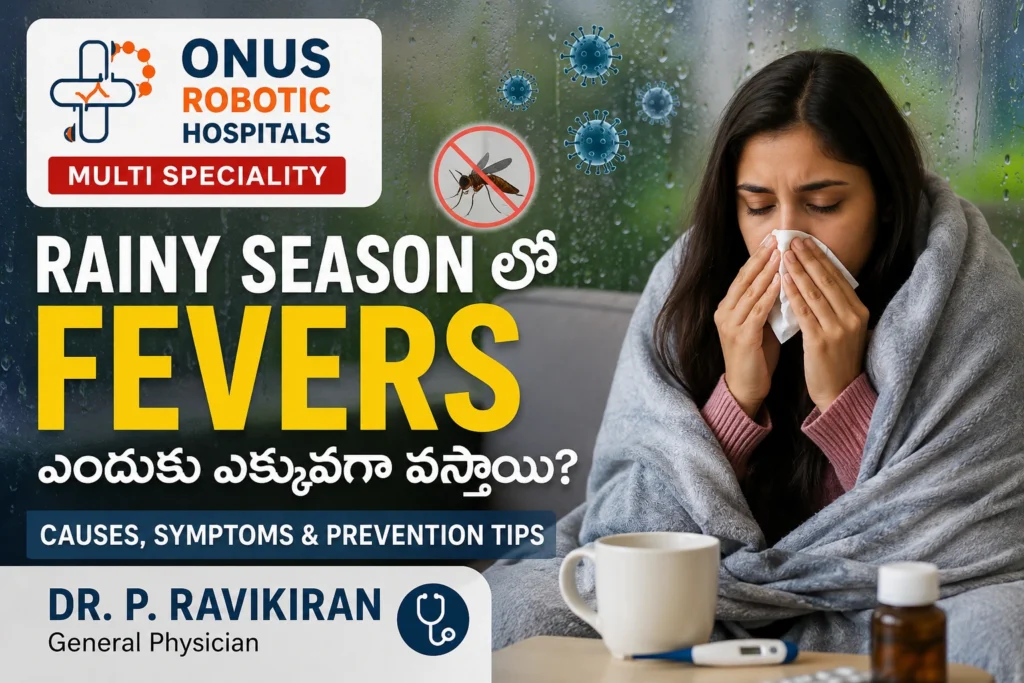
The rainy season brings much-needed relief from the summer heat, but it also increases the risk of several infections. Every year during the monsoon, hospitals witness a significant rise in patients suffering from viral fevers, dengue, malaria, stomach infections, and other seasonal illnesses.
Many people wonder why fevers become so common during the rainy season. The answer lies in the environmental changes that favor the growth and spread of disease-causing organisms.
In this article, Dr. P. Ravikiran, General Physician at ONUS Robotic Hospitals, explains the common causes of rainy season fevers, their symptoms, preventive measures, and when you should seek medical attention.
Why Do Fevers Increase During the Rainy Season?
Several factors contribute to the higher incidence of fevers during the monsoon.
These include:
- Mosquito breeding due to stagnant water
- Contaminated drinking water
- Consumption of unhygienic food
- Increased humidity that helps viruses survive longer
- Lower immunity in some individuals
Because of these factors, bacterial, viral, and mosquito-borne infections become more common during the rainy season.
Common Causes of Rainy Season Fevers
1. Mosquito-Borne Diseases
Rainwater often collects in open containers, construction sites, coolers, flower pots, discarded tyres, and drains. These stagnant water sources become breeding grounds for mosquitoes.
Mosquitoes spread serious diseases such as:
- Dengue Fever
- Malaria
- Chikungunya
These infections commonly present with high fever, body pain, weakness, headaches, and joint pain.
2. Contaminated Drinking Water
Heavy rains may contaminate drinking water with bacteria, viruses, and parasites.
Drinking unsafe water increases the risk of infections such as:
- Typhoid
- Gastroenteritis
- Cholera
- Viral stomach infections
These illnesses often cause fever along with vomiting, diarrhea, stomach pain, and dehydration.
3. Food-Borne Infections
Street food and improperly stored food are more likely to become contaminated during the rainy season.
Eating contaminated food may lead to:
- Food poisoning
- Gastrointestinal infections
- Bacterial infections
Maintaining proper food hygiene significantly reduces the risk.
4. Viral Infections
The humid weather during the rainy season allows certain viruses to survive longer in the environment.
This increases the spread of viral illnesses through:
- Sneezing
- Coughing
- Close contact
- Contaminated surfaces
Viral fever usually presents with:
- Fever
- Sore throat
- Runny nose
- Body pain
- Fatigue
5. Low Immunity
Individuals with weakened immunity are more susceptible to seasonal infections.
People at higher risk include:
- Children
- Elderly individuals
- Diabetic patients
- Pregnant women
- People with chronic illnesses
Maintaining a healthy immune system helps reduce infection risk.
Common Symptoms of Rainy Season Fevers
Symptoms vary depending on the underlying infection but may include:
- High fever
- Chills
- Headache
- Body aches
- Joint pain
- Fatigue
- Loss of appetite
- Nausea or vomiting
- Loose motions
- Stomach pain
- Weakness
- Sore throat
- Cough
Persistent or severe symptoms require immediate medical evaluation.
How Can You Protect Yourself During the Rainy Season?
Following a few simple precautions can significantly reduce your risk of infection.
Maintain Hand Hygiene
Wash your hands frequently using soap and clean water, especially:
After touching public surfaces
Before eating
After using the restroom
After returning home
Drink Safe Water
Always consume:
- Boiled water
- Filtered water
- Packaged drinking water from reliable sources
Avoid drinking water from unsafe or unknown sources.
Avoid Outside Food
During the rainy season:
- Avoid roadside food
- Eat freshly prepared meals
- Wash fruits and vegetables thoroughly
- Store food properly
Food hygiene plays an important role in preventing stomach infections.
Prevent Mosquito Breeding
Protect yourself by:
- Removing stagnant water around your home
- Cleaning water tanks regularly
- Using mosquito repellents
- Sleeping under mosquito nets if necessary
- Wearing full-sleeved clothing
These simple measures help reduce mosquito-borne diseases.
Strengthen Your Immunity
A healthy immune system helps fight infections more effectively.
Support your immunity by:
- Eating nutritious meals
- Staying hydrated
- Getting enough sleep
- Exercising regularly
- Managing stress
- Including fresh fruits and vegetables in your diet
When Should You See a Doctor?
Do not ignore fever if it persists or worsens.
Consult a doctor immediately if you experience:
- Fever lasting more than 2–3 days
- Severe chills
- Persistent vomiting
- Loose motions
- Severe body pain
- Extreme weakness
- Difficulty breathing
- Bleeding symptoms
- Confusion
- Dehydration
Early diagnosis helps identify the exact cause and ensures timely treatment.
Why Early Diagnosis Is Important
Not all fevers are caused by viral infections.
Conditions like dengue, malaria, typhoid, and bacterial infections require specific investigations and treatment.
Delaying medical care may lead to serious complications, especially in elderly individuals, young children, and patients with chronic diseases.
Stay Healthy This Monsoon
The rainy season is enjoyable, but it also demands extra attention to personal hygiene and preventive healthcare.
By drinking safe water, eating hygienic food, protecting yourself from mosquitoes, and maintaining good immunity, you can significantly reduce your risk of seasonal fevers.
If fever persists beyond a couple of days or is accompanied by severe symptoms, consult a qualified physician without delay.
About the Doctor
Dr. P. Ravikiran
General Physician
ONUS Robotic Hospitals
Dr. P. Ravikiran specializes in the diagnosis and treatment of seasonal illnesses, viral infections, dengue, malaria, typhoid, diabetes, hypertension, and general medical conditions. He focuses on preventive healthcare, early diagnosis, and evidence-based treatment to help patients recover safely and maintain long-term health.
Frequently Asked Questions (FAQs)
Why are fevers more common during the rainy season?
The rainy season creates favorable conditions for mosquito breeding, water contamination, food contamination, and viral spread due to increased humidity.
Can viral fever spread from one person to another?
Yes. Many viral infections spread through respiratory droplets, close contact, or contaminated surfaces.
How can I prevent dengue during the monsoon?
Prevent stagnant water around your home, use mosquito repellents, wear protective clothing, and keep your surroundings clean.
Is every rainy season fever dengue?
No. Fever during the rainy season may be caused by viral infections, malaria, typhoid, food poisoning, or bacterial infections. Proper medical evaluation is necessary for an accurate diagnosis.
When should I visit a doctor for fever?
Seek medical attention if fever lasts more than 2–3 days or is associated with severe weakness, vomiting, breathing difficulty, bleeding, or persistent loose motions.
Consultation
📍 Dr. Ravi Kiran
Diabetologist & Preventive Medicine Specialist
Onus Robotic Hospital, Hyderabad