Introduction
Most infections, such as a sore throat, urinary tract infection (UTI), pneumonia, or skin infection, can be treated successfully when diagnosed early. However, ignoring an infection or delaying treatment can sometimes lead to Sepsis, a life-threatening medical emergency.
Sepsis occurs when the body’s response to an infection becomes uncontrolled, leading to widespread inflammation that can damage vital organs. Without immediate medical care, sepsis can rapidly progress to septic shock, organ failure, and even death.
According to Dr. P. Ravikiran, General Physician & Infectious Disease Specialist, recognizing the warning signs early and seeking prompt medical attention can significantly improve survival and reduce complications.
What is Sepsis?
Sepsis is the body’s extreme response to an infection.
Normally, the immune system fights infection to protect the body. In sepsis, the immune response becomes excessive and begins attacking healthy tissues and organs instead of only targeting the infection.
This widespread inflammation can affect:
- Brain
- Heart
- Lungs
- Kidneys
- Liver
- Blood circulation
Sepsis is a medical emergency that requires immediate hospital treatment.
What Causes Sepsis?
Sepsis can develop from almost any infection if it is severe or left untreated.
Common infections that may lead to sepsis include:
- Pneumonia
- Urinary Tract Infections (UTIs)
- Skin infections
- Wound infections
- Abdominal infections
- Bloodstream infections
- Kidney infections
- Severe viral or bacterial infections
Although not every infection becomes sepsis, delaying treatment increases the risk.
Who is at Higher Risk?
Anyone can develop sepsis, but the risk is higher in:
- Older adults (above 65 years)
- Infants and young children
- People with diabetes
- Cancer patients
- Individuals with weakened immune systems
- Patients with chronic kidney or liver disease
- People recovering from major surgery
- Individuals admitted to intensive care units (ICUs)
These individuals should seek medical care promptly if an infection develops.
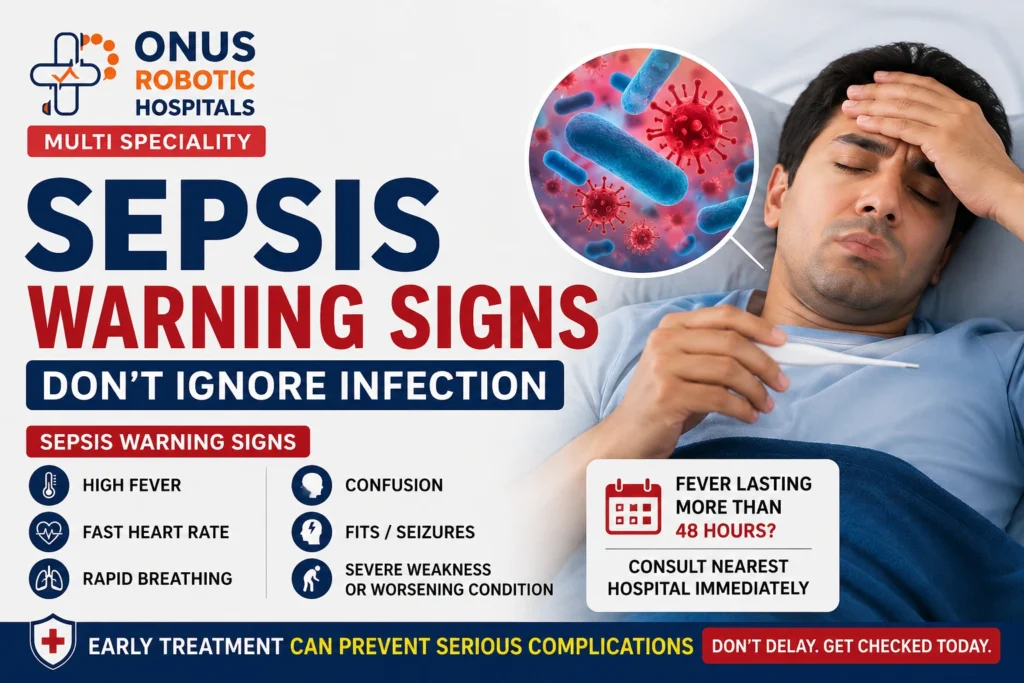
Warning Signs of Sepsis
Recognizing the early warning signs can save lives.
Common symptoms include:
✅ High fever
A persistent high fever may indicate that the body is fighting a serious infection.
✅ Fast Heart Rate
A rapid heartbeat may occur as the body responds to infection and inflammation.
✅ Rapid Breathing
Breathing faster than normal or experiencing shortness of breath can be an early warning sign.
✅ Confusion or Altered Mental Status
Patients may become confused, disoriented, unusually sleepy, or less responsive.
✅ Fits or Seizures
Severe infections affecting the brain may cause seizures in some patients.
✅ Severe Weakness or Rapidly Worsening Condition
Extreme weakness, inability to stand, worsening fatigue, or sudden deterioration should never be ignored.
Fever Lasting More Than 48 Hours? Don’t Delay
A fever that continues for more than 48 hours, especially when accompanied by worsening symptoms, should always be evaluated by a qualified doctor.
Persistent fever may indicate:
- A serious bacterial infection
- Viral infections requiring monitoring
- Hidden infections
- Early sepsis
Do not rely solely on self-medication if fever persists.
Why Early Treatment is Important
Early medical treatment can:
- Control the infection
- Prevent sepsis
- Reduce the risk of organ damage
- Shorten hospital stay
- Improve recovery
- Save lives
Delaying treatment allows the infection to spread and increases the chances of severe complications.
How is Sepsis Diagnosed?
Doctors evaluate patients using:
- Medical history
- Physical examination
- Blood tests
- Blood cultures
- Urine tests
- Chest X-ray
- CT Scan or Ultrasound (when needed)
- Oxygen level monitoring
- Blood pressure assessment
Prompt diagnosis allows treatment to begin without delay.
Treatment for Sepsis
Treatment depends on the severity of the infection and usually includes:
Intravenous (IV) Antibiotics
Early administration of appropriate antibiotics is one of the most important treatments for bacterial sepsis.
IV Fluids
Fluids help maintain blood pressure and improve circulation.
Oxygen Therapy
Patients with breathing difficulties may require oxygen support.
Intensive Care (ICU)
Severe cases may need close monitoring and advanced life-support measures.
Treating the Source of Infection
Doctors also identify and treat the underlying infection, whether it involves the lungs, urinary tract, skin, abdomen, or bloodstream.
Can Sepsis Be Prevented?
While not all cases can be prevented, the risk can be reduced by:
- Treating infections early
- Completing prescribed antibiotics as directed
- Keeping wounds clean
- Maintaining good hand hygiene
- Managing chronic diseases like diabetes
- Staying up to date with vaccinations
- Seeking medical care for persistent fever or worsening symptoms
Prevention starts with early recognition and timely treatment.
When Should You Go to the Hospital Immediately?
Visit the nearest hospital or emergency department immediately if you experience:
- Fever lasting more than 48 hours
- High fever with chills
- Difficulty breathing
- Rapid heartbeat
- Confusion
- Fits or seizures
- Extreme weakness
- Low blood pressure
- Sudden worsening of an existing infection
Early hospital treatment greatly improves outcomes.
Conclusion
Never ignore an infection, even if it appears mild in the beginning. In some cases, untreated infections can progress to sepsis, a life-threatening condition that requires immediate medical attention.
Recognizing warning signs such as persistent high fever, rapid breathing, fast heart rate, confusion, seizures, or sudden worsening of your condition can help ensure timely treatment and prevent serious complications.
If you or your loved one develops persistent fever or signs of severe infection, consult a healthcare professional without delay.
Frequently Asked Questions (FAQs)
What is sepsis?
Sepsis is a life-threatening condition in which the body’s response to an infection causes widespread inflammation and organ damage.
Can a simple infection become sepsis?
Yes. If left untreated or if the infection becomes severe, it may progress to sepsis.
How long should I wait before seeing a doctor for fever?
If your fever lasts more than 48 hours, or if it is accompanied by severe symptoms such as confusion, rapid breathing, or weakness, seek medical attention immediately.
Is sepsis contagious?
No. Sepsis itself is not contagious, but the infection that causes it may be contagious depending on its source.
Can sepsis be treated successfully?
Yes. Early diagnosis and prompt hospital treatment greatly improve recovery and reduce the risk of complications.
Consultation
📍 Dr. Ravi Kiran
Diabetologist & Preventive Medicine Specialist
Onus Robotic Hospital, Hyderabad