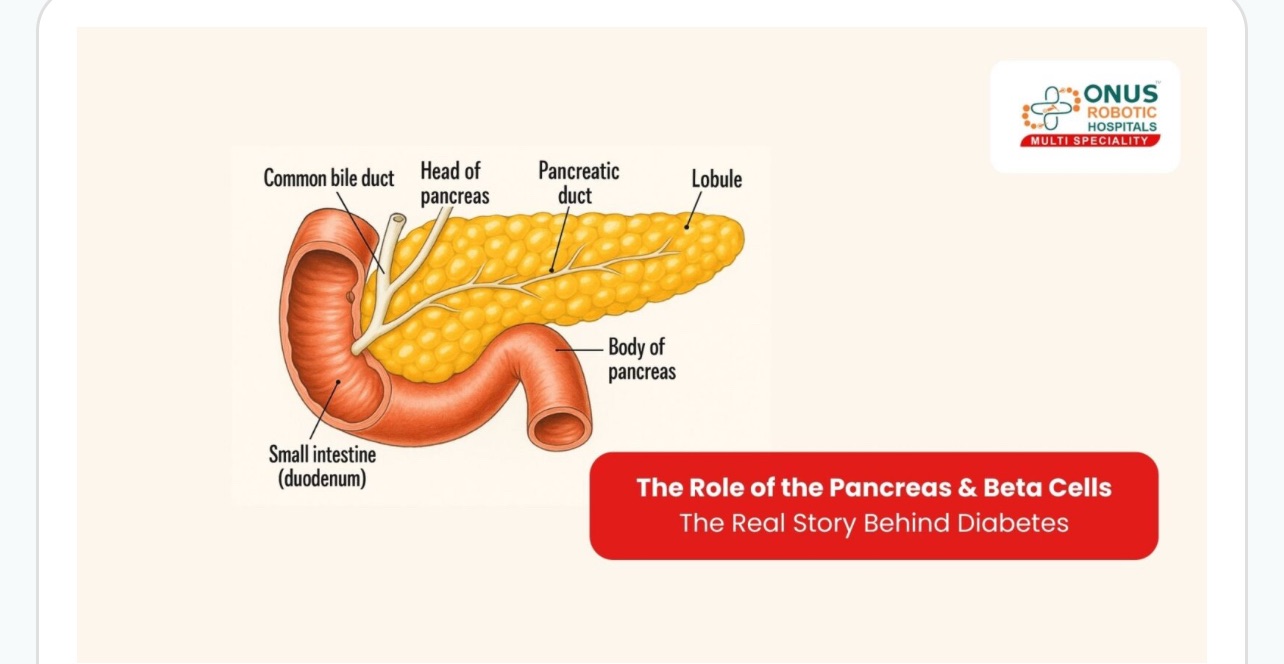

Introduction
Your pancreas is a small organ with a very big responsibility. It produces insulin, the hormone that keeps your blood sugar stable.
Inside the pancreas are beta cells—tiny cells with a massive impact on diabetes.
Most patients who visit Onus Robotic Hospital are unaware that diabetes is not just a “sugar problem”—it’s a beta cell problem.
Let’s understand this clearly.
What Is the Pancreas?
The pancreas is located behind your stomach. It has two main functions:
Digestive function – enzymes that break down food
Hormonal function – insulin and glucagon production
The hormonal part contains Islets of Langerhans, where beta cells live.
What Do Beta Cells Do?
Beta cells are insulin factories of the body.
Beta Cells:
Sense sugar levels
Release insulin at the right time
Maintain normal glucose throughout the day
Prevent sugar spikes after meals
When you eat food, beta cells quickly release stored insulin (first phase), followed by newly produced insulin (second phase).
What Happens When Beta Cells Get Damaged?
Beta cell dysfunction is the root cause of diabetes.
Damage happens due to:
Genetics
Obesity
Insulin resistance
High-carb diet
Chronic inflammation
Long-standing uncontrolled sugars
Once beta cells are exhausted, insulin production drops → leading to Type 2 diabetes, LADA, or worsening glucose levels.
Can Beta Cells Recover?
Yes—partially.
With early intervention and structured programs like those at Onus Robotic Hospital, beta cell stress can be reduced through:
Weight reduction
Low-carb / balanced meals
Physical activity
Reduced insulin resistance
Optimal medications
Summary
Beta cells are the heart of your sugar control system. Protecting them is key to preventing and reversing early stages of metabolic disease.
At Onus Robotic Hospital, we help patients preserve their beta cell function for long-term health.