Introduction
Many people notice that maintaining a healthy weight becomes increasingly difficult as they grow older. Even individuals who were naturally slim in their younger years may begin to gain weight around the abdomen despite following similar eating habits and activity levels.
One of the most common concerns among middle-aged adults is the gradual increase in belly fat. This change is not simply a cosmetic issue. Excess abdominal fat, particularly visceral fat, is closely linked to insulin resistance, Type 2 diabetes, heart disease, fatty liver disease, and other metabolic disorders.
Understanding why belly fat increases with age can help individuals take proactive steps to maintain their health, mobility, and quality of life.
What Happens to Our Body Composition as We Age?
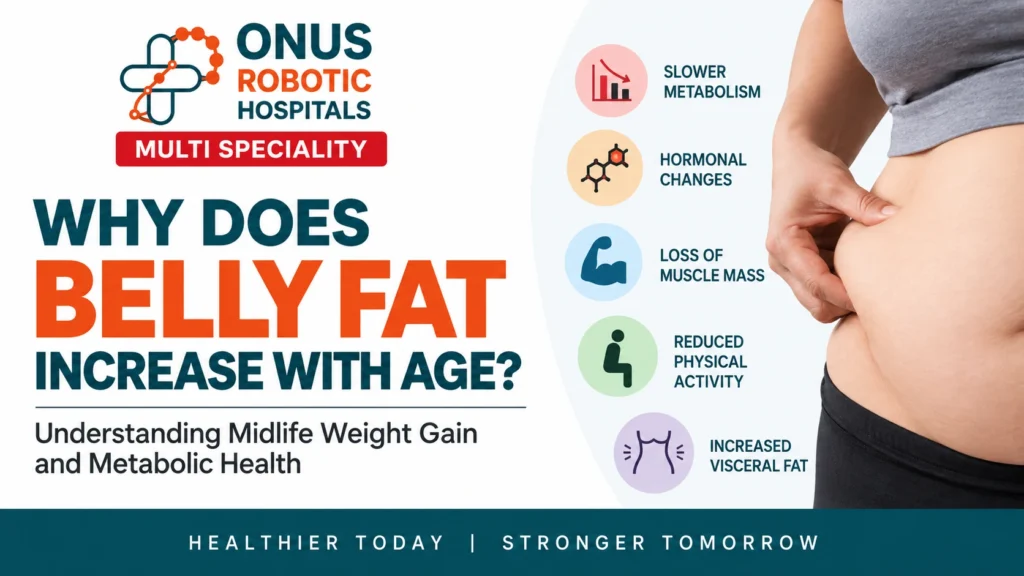
As we get older, our body undergoes several natural changes.
These include:
- Loss of muscle mass
- Slower metabolism
- Hormonal changes
- Reduced physical activity
- Increased fat accumulation
Even if body weight remains stable, body composition may change significantly. Many adults lose muscle and gain fat over time without realizing it.
This shift contributes to increased abdominal fat and metabolic health risks.
What Is Belly Fat?
Not all belly fat is the same.
Subcutaneous Fat
Subcutaneous fat is located directly beneath the skin. It is the fat you can pinch around your waist.
Visceral Fat
Visceral fat is stored deeper within the abdomen around internal organs such as:
- Liver
- Pancreas
- Intestines
- Kidneys
Visceral fat is metabolically active and poses a greater health risk than subcutaneous fat.
Why Does Belly Fat Increase With Age?
Several factors contribute to age-related weight gain and abdominal obesity.
1. Loss of Muscle Mass (Sarcopenia)
After the age of 30, adults gradually begin losing muscle mass.
This process accelerates with advancing age.
Muscle tissue burns more calories than fat tissue. As muscle mass decreases:
- Metabolic rate slows
- Daily calorie requirements decrease
- Fat accumulation becomes easier
Without strength training and adequate protein intake, age-related muscle loss can significantly contribute to belly fat gain.
2. Slower Metabolism
Many people notice they can no longer eat the same way they did in their twenties.
This happens partly because:
- Muscle mass declines
- Physical activity often decreases
- Energy expenditure becomes lower
As metabolism slows, excess calories are more likely to be stored as fat.
3. Hormonal Changes
Hormones play an important role in fat distribution.
In Women
During perimenopause and menopause:
- Estrogen levels decline
- Fat storage patterns change
- More fat accumulates around the abdomen
Many women notice increased waist circumference despite maintaining the same weight.
In Men
Gradual reductions in testosterone may contribute to:
- Increased body fat
- Reduced muscle mass
- Increased abdominal obesity
4. Increased Insulin Resistance
Insulin sensitivity tends to decrease with age.
When insulin resistance develops:
- Blood sugar regulation becomes less efficient
- Fat storage increases
- Weight loss becomes more difficult
Insulin resistance is one of the strongest contributors to abdominal obesity and metabolic disease.
5. Reduced Physical Activity
Work demands, family responsibilities, joint pain, and sedentary lifestyles often lead to lower activity levels during midlife.
Reduced movement results in:
- Lower calorie expenditure
- Muscle loss
- Increased fat accumulation
Regular physical activity becomes increasingly important with age.
6. Poor Sleep Patterns
Sleep quality often changes with age.
Poor sleep can affect hormones that regulate:
- Hunger
- Appetite
- Fat storage
- Blood sugar control
Studies consistently show that inadequate sleep is associated with obesity and insulin resistance.
Why Is Belly Fat More Dangerous Than Fat in Other Areas?
Visceral fat behaves differently from other fat stores.
It produces inflammatory chemicals that may contribute to:
- Insulin resistance
- Prediabetes
- Type 2 diabetes
- High blood pressure
- Heart disease
- Stroke
- Fatty liver disease
This is why abdominal obesity is considered a major marker of metabolic health risk.
Warning Signs of Excess Visceral Fat
You may have excess visceral fat if you notice:
- Increasing waist circumference
- Tightening waistbands
- Difficulty losing weight
- Elevated blood sugar
- Fatty liver disease
- High triglycerides
- High blood pressure
Regular health checkups can help identify these issues early.
The Connection Between Belly Fat and Diabetes
Excess abdominal fat contributes directly to insulin resistance.
As insulin resistance worsens:
- Blood sugar levels rise
- Prediabetes develops
- Type 2 diabetes risk increases
Many people diagnosed with diabetes have significant abdominal obesity.
Reducing visceral fat can improve insulin sensitivity and blood sugar control.
Can Belly Fat Be Reduced After 40 or 50?
Absolutely.
Although weight loss may become more challenging with age, it is still achievable.
Research shows that lifestyle changes can reduce visceral fat at any age.
The key is consistency rather than extreme dieting.
Effective Strategies to Reduce Belly Fat
1. Prioritize Protein
Protein helps:
- Preserve muscle mass
- Increase satiety
- Support healthy metabolism
Good protein sources include:
- Eggs
- Fish
- Chicken
- Lentils
- Paneer
- Greek yogurt
- Beans
2. Include Strength Training
Strength training helps combat age-related muscle loss.
Benefits include:
- Improved metabolism
- Better insulin sensitivity
- Increased calorie burning
- Better body composition
Aim to include resistance exercises regularly.
3. Walk Daily
Walking remains one of the most effective and accessible forms of exercise.
Benefits include:
- Improved blood sugar control
- Better cardiovascular health
- Increased calorie expenditure
- Reduced visceral fat
Consistency is more important than intensity.
4. Improve Sleep Quality
Aim for approximately 7–9 hours of quality sleep per night.
Good sleep supports:
- Hormonal balance
- Appetite control
- Metabolic health
- Weight management
5. Reduce Processed Foods
Limit:
- Sugary beverages
- Refined carbohydrates
- Processed snacks
- Excess sweets
Focus on whole, nutrient-dense foods.
6. Manage Stress
Chronic stress can promote abdominal fat accumulation.
Helpful techniques include:
- Yoga
- Meditation
- Walking
- Deep breathing exercises
- Relaxation practices
When Should You Seek Medical Advice?
Consult a healthcare professional if you have:
- Persistent abdominal obesity
- Prediabetes
- Type 2 diabetes
- Fatty liver disease
- High blood pressure
- Difficulty losing weight
- Family history of metabolic disease
A comprehensive evaluation can help identify underlying causes and guide appropriate treatment.
Conclusion
Belly fat often increases with age due to a combination of muscle loss, hormonal changes, slower metabolism, insulin resistance, reduced activity levels, and lifestyle factors.
While these changes are common, they are not inevitable. Healthy nutrition, regular exercise, strength training, adequate sleep, and proper medical guidance can help reduce visceral fat and improve metabolic health.
Managing belly fat is about much more than appearance—it is about protecting long-term health, preventing chronic disease, and maintaining vitality throughout life.
Dr. Ravi Kiran
Diabetologist & Preventive Medicine Specialist
Onus Robotic Hospital, Hyderabad