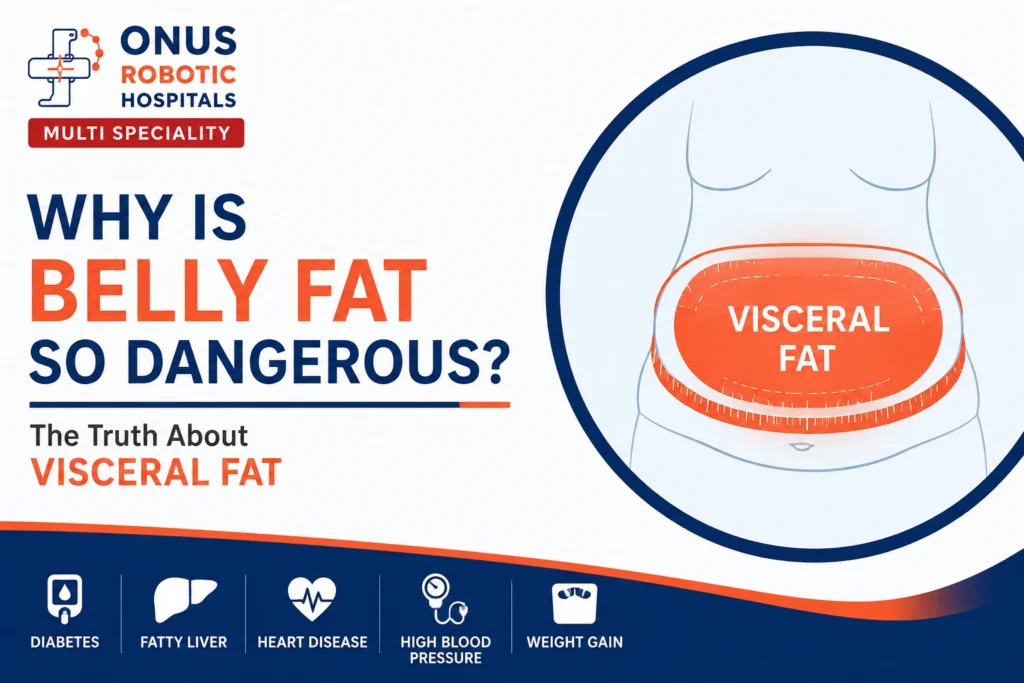
Why Is Belly Fat So Dangerous? The Truth About Visceral Fat – By Dr. Ravi Kiran | Diabetologist, Onus Robotic Hospital
When people think about belly fat, they often focus on appearance. A larger waistline may affect confidence, clothing choices, and body image. However, the real concern goes far beyond looks.
The fat that accumulates around the abdomen—particularly around vital internal organs—can significantly increase the risk of serious health conditions, including Type 2 diabetes, fatty liver disease, heart disease, stroke, hypertension, and metabolic syndrome.
This hidden fat, known as visceral fat, is considered one of the most harmful forms of body fat because of its direct impact on metabolism and overall health.
At Health Vision General & Sugar Clinic, Dr. P. Ravi Kiran helps patients identify and reduce harmful visceral fat through evidence-based lifestyle interventions, medical evaluation, and personalized metabolic health programs.
Understanding Belly Fat
Not all fat stored in the body behaves the same way.
Belly fat consists of two distinct types:
1. Subcutaneous Fat
Subcutaneous fat is located directly beneath the skin.
This is the soft layer of fat that can be pinched around the abdomen, hips, thighs, and arms.
Although excessive subcutaneous fat contributes to obesity, it is generally less harmful than visceral fat.
2. Visceral Fat
Visceral fat is stored deep inside the abdomen and surrounds major organs such as:
- Liver
- Pancreas
- Kidneys
- Intestines
- Stomach
Unlike subcutaneous fat, visceral fat is not always visible externally. Even individuals who appear relatively slim may have excessive visceral fat and increased metabolic risk.
Because visceral fat actively releases hormones and inflammatory chemicals, it directly influences the body’s metabolic processes.
Why Visceral Fat Is Called “Active Fat”
Visceral fat is often referred to as active fat because it functions almost like an endocrine organ.
It releases substances that can:
- Increase inflammation
- Reduce insulin sensitivity
- Raise blood pressure
- Disrupt cholesterol metabolism
- Promote fat accumulation in the liver
- Increase cardiovascular risk
These biological effects explain why excess abdominal fat is associated with numerous chronic diseases.
Health Risks Associated with Excess Belly Fat
Type 2 Diabetes
One of the strongest links between visceral fat and disease is its role in insulin resistance.
When visceral fat increases:
- Cells become less responsive to insulin.
- Blood sugar levels rise.
- The pancreas works harder to produce insulin.
- Prediabetes and diabetes become more likely.
Studies consistently show that reducing abdominal fat improves insulin sensitivity and blood sugar control.
Fatty Liver Disease (MASLD)
The liver receives excess fatty acids released from visceral fat.
Over time, this can lead to Metabolic Dysfunction-Associated Steatotic Liver Disease (MASLD), commonly referred to as fatty liver disease.
If left untreated, fatty liver disease may progress to:
- Liver inflammation
- Fibrosis
- Cirrhosis
- Liver failure in severe cases
Reducing visceral fat is one of the most effective ways to improve liver health.
Heart Disease and Stroke
Visceral fat contributes to multiple cardiovascular risk factors, including:
- High blood pressure
- Elevated triglycerides
- Increased LDL cholesterol
- Chronic inflammation
- Atherosclerosis
These factors increase the likelihood of:
- Coronary artery disease
- Heart attack
- Stroke
- Peripheral vascular disease
Maintaining a healthy waistline is an important step toward protecting heart health.
Metabolic Syndrome
People with excess belly fat often develop a cluster of conditions known as metabolic syndrome, which includes:
- Increased waist circumference
- High blood sugar
- High blood pressure
- Elevated triglycerides
- Low HDL (good cholesterol)
Metabolic syndrome significantly increases the risk of diabetes and cardiovascular disease.over time.
Sleep Apnea
Excess abdominal fat is linked to obstructive sleep apnea, a condition characterized by repeated interruptions in breathing during sleep.
Symptoms include:
- Loud snoring
- Daytime fatigue
- Poor concentration
- Morning headaches
Treating obesity and reducing visceral fat often improves sleep quality and breathing patterns.
What Causes Belly Fat?
Several lifestyle and biological factors contribute to abdominal fat accumulation.
Unhealthy Diet
Regular consumption of:
- Sugary beverages
- Processed foods
- Refined carbohydrates
- Fast food
- Excess calories
promotes fat storage around abdominal organs.
Lack of Physical Activity
Sedentary lifestyles reduce energy expenditure and encourage fat accumulation.
Long hours of sitting combined with minimal exercise are strongly associated with increased visceral fat.
Poor Sleep
Chronic sleep deprivation affects hormones that regulate hunger and metabolism.
People who consistently sleep less than seven hours often experience:
- Increased appetite
- Sugar cravings
- Weight gain
- Greater abdominal fat accumulation
Chronic Stress
Stress triggers the release of cortisol, a hormone associated with increased fat storage around the abdomen.
Persistent stress can make weight management significantly more difficult.
Hormonal Changes
Hormonal shifts during aging, menopause, thyroid disorders, and certain medical conditions can influence where fat is stored in the body.
Genetic Factors
Genetics can affect body shape and fat distribution patterns.
However, lifestyle choices remain the most important factor in determining long-term metabolic health.
How Do You Know If You Have Excess Visceral Fat?
Visceral fat cannot be accurately judged by appearance alone.
Healthcare professionals assess several indicators, including:
Waist Circumference
Waist measurement is one of the simplest and most effective screening tools.
An increasing waistline often indicates growing visceral fat stores.
Body Mass Index (BMI)
BMI provides an estimate of overall body weight relative to height.
While useful, BMI does not distinguish between muscle mass and visceral fat.
Waist-to-Height Ratio
This measurement helps assess abdominal obesity more accurately than BMI alone.
Body Composition Analysis
Advanced body composition assessments provide detailed information about:
- Total body fat
- Muscle mass
- Visceral fat levels
- Metabolic health indicators
These measurements help create more personalized treatment plans.
Can You Specifically Target Belly Fat?
One of the most common misconceptions is that abdominal exercises alone can remove belly fat.
Unfortunately, spot reduction is a myth.
Performing hundreds of sit-ups or crunches will strengthen abdominal muscles but will not selectively burn fat from the stomach area.
Fat loss occurs throughout the body and depends on overall calorie balance and metabolic health.
Best Dietary Strategies for Reducing Belly Fat
Healthy nutrition plays a central role in reducing visceral fat.
Include More:
- Green leafy vegetables
- Whole grains
- Pulses and legumes
- Lean protein sources
- Fish
- Eggs
- Low-fat dairy products
- Nuts and seeds
- High-fiber foods
Limit:
- Sugary drinks
- Sweets and desserts
- Processed snacks
- Refined flour products
- Deep-fried foods
- Excess alcohol
Sustainable eating habits are more effective than restrictive fad diets.
Exercise Recommendations for Reducing Visceral Fat
Research shows that combining aerobic exercise with resistance training produces the best results.
Aerobic Activities
- Brisk walking
- Cycling
- Swimming
- Jogging
- Dancing
Strength Training
- Resistance bands
- Bodyweight exercises
- Weight training
Experts recommend:
- 150–300 minutes of moderate-intensity exercise per week
- Muscle-strengthening activities at least twice weekly
Consistency is more important than intensity alone.
The Importance of Sleep and Stress Management
Lifestyle interventions extend beyond diet and exercise.
Prioritize Quality Sleep
Aim for:
- 7–9 hours of sleep nightly
- Consistent sleep schedules
- Reduced screen time before bed
Manage Stress Effectively
Helpful strategies include:
- Meditation
- Yoga
- Deep breathing exercises
- Regular physical activity
- Counseling when needed
Stress management plays a crucial role in reducing cortisol-driven abdominal fat accumulation.
The Health Vision 100-Day Metabolic Transformation Program
At Health Vision General & Sugar Clinic, Dr. P. Ravi Kiran offers a structured metabolic health program focused on long-term improvement rather than quick fixes.
The program includes:
✔ Comprehensive health evaluation
✔ Body composition analysis
✔ Personalized nutrition planning
✔ Exercise prescription
✔ Diabetes prevention strategies
✔ Fatty liver management
✔ Weight reduction guidance
✔ Lifestyle coaching
✔ Regular progress tracking
The goal is not merely weight loss but sustainable metabolic transformation.
Frequently Asked Questions
Is belly fat more harmful than fat in other areas?
Yes. Visceral fat surrounding internal organs carries significantly greater health risks than fat stored under the skin.
Can walking reduce belly fat?
Yes. Regular brisk walking combined with healthy eating can effectively reduce visceral fat over time.
How quickly can belly fat be reduced?
Results vary among individuals. Sustainable fat loss usually occurs gradually through consistent lifestyle changes.
Can a person with normal body weight have excess visceral fat?
Yes. Some individuals with a normal BMI may still have excessive visceral fat and increased metabolic risk.
Is waist circumference important?
Absolutely. Waist circumference is one of the strongest indicators of metabolic health and future disease risk.
Conclusion
Belly fat is not merely a cosmetic issue. Excess visceral fat acts as a powerful driver of insulin resistance, Type 2 diabetes, fatty liver disease, cardiovascular disease, and metabolic syndrome.
The encouraging news is that visceral fat responds remarkably well to healthy lifestyle changes. Through balanced nutrition, regular exercise, adequate sleep, stress management, and appropriate medical guidance, individuals can significantly improve their metabolic health and reduce long-term disease risk.
If you are concerned about increasing waist size, fatty liver disease, prediabetes, or obesity-related health issues, seeking professional medical advice can help you take control of your health before serious complications develop.
About Dr. P. Ravi Kiran
Dr. P. Ravi Kiran is a General Physician, Diabetologist, and Preventive Medicine Specialist with expertise in diabetes management, obesity treatment, metabolic syndrome, fatty liver disease, hypertension, and lifestyle medicine. Through Health Vision General & Sugar Clinic, he provides comprehensive, evidence-based care designed to help patients achieve sustainable weight loss, improved metabolic health, and long-term disease prevention.
Consultation
📍 Dr. Ravi Kiran
Diabetologist & Preventive Medicine Specialist
Onus Robotic Hospital, Hyderabad